Showing posts with label United Kingdom UNESCO. Show all posts

Tuesday, February 25, 2025

The Great Spa Towns of Europe


Austria-Belgium- Czechia- France-Germany-Italy- UK
This transnational property comprises 11 towns, located in seven European countries: Baden bei Wien (Austria); Spa (Belgium); Františkovy Lázně (Czechia); Karlovy Vary (Czechia); Mariánské Lázně (Czechia); Vichy (France); Bad Ems (Germany); Baden-Baden (Germany); Bad Kissingen (Germany); Montecatini Terme (Italy); and City of Bath (United Kingdom). All of these towns developed around natural mineral water springs. They bear witness to the international European spa culture that developed from the early 18th century to the 1930s, leading to the emergence of grand international resorts that impacted urban typology around ensembles of spa buildings such as the kurhaus and kursaal (buildings and rooms dedicated to therapy), pump rooms, drinking halls, colonnades and galleries designed to harness the natural mineral water resources and to allow their practical use for bathing and drinking. Related facilities include gardens, assembly rooms, casinos, theatres, hotels and villas, as well as spa-specific support infrastructure. These ensembles are all integrated into an overall urban context that includes a carefully managed recreational and therapeutic environment in a picturesque landscape. Together, these sites embody the significant interchange of human values and developments in medicine, science and balneology. source:whc.unesco.org

1. Austria- Baden Bei Wein- Received
2. Belgium- Spa
3. Czech Republic-Frantiskovy Lazne
4. Czech Republic- Karlovy Vary
5. Czech Republic- Marianske Lazne
6. France- Vichy- Received
7. Germany- Bad ems
8. Germany- Baden Baden
9. Germany- Bad Kissigen- Received
10. Italy- Montecatini Terme- Received
11. United Kingdom- Bath- Received
Inscribed: 2021

France- Vichy


Thanks to Ms Julie.

Austria- Baden Bei Wein


Thanks to MS Monika. 

United Kingdom -The City of Bath


Thanks to Ms Nat.
 Germany- Bad Kissingen


Thanks to Ms Svenja
Italy- Montecatini Terme

Thanks to Ms Martha Isabel

Sunday, November 24, 2024

United Kingdom: Jodrell Bank Observatory

Located in a rural area of northwest England, free from radio interference, Jodrell Bank is one of the world's leading radio astronomy observatories. At the beginning of its use, in 1945, the property housed research on cosmic rays detected by radar echoes. This observatory, which is still in operation, includes several radio telescopes and working buildings, including engineering sheds and the Control Building. Jodrell Bank has had substantial scientific impact in fields such as the study of meteors and the moon, the discovery of quasars, quantum optics, and the tracking of spacecraft. This exceptional technological ensemble illustrates the transition from traditional optical astronomy to radio astronomy (1940s to 1960s), which led to radical changes in the understanding of the universe. Source: whc.unesco.org
Inscribed: 2019

Postcard 1


Thanks to MS Tiara
Postcard 2

Thanks to Ms S Montgomery.

United Kingdom: St Kilda

This volcanic archipelago, with its spectacular landscapes, is situated off the coast of the Hebrides and comprises the islands of Hirta, Dun, Soay and Boreray. It has some of the highest cliffs in Europe, which have large colonies of rare and endangered species of birds, especially puffins and gannets. The archipelago, uninhabited since 1930, bears the evidence of more than 2,000 years of human occupation in the extreme conditions prevalent in the Hebrides. Human vestiges include built structures and field systems, the cleits and the traditional Highland stone houses. They feature the vulnerable remains of a subsistence economy based on the products of birds, agriculture and sheep farming. source:whc.unesco.org
Inscribed: 1986, Modification: 2004,2005


 Thanks to Stella

Saturday, September 14, 2024

United Kingdom: Blaenavon Industrial Landscape

The area around Blaenavon is evidence of the pre-eminence of South Wales as the world's major producer of iron and coal in the 19th century. All the necessary elements can still be seen - coal and ore mines, quarries, a primitive railway system, furnaces, workers' homes, and the social infrastructure of their community. source:whc.unesco.org
Inscribed: 2000

Thanks to Ms Tiara
 

Tuesday, July 5, 2022

United Kingdom/ Germany: Frontiers of the Roman Empire

The ‘Roman Limes’ represents the border line of the Roman Empire at its greatest extent in the 2nd century AD. It stretched over 5,000 km from the Atlantic coast of northern Britain, through Europe to the Black Sea, and from there to the Red Sea and across North Africa to the Atlantic coast. The remains of the Limes today consist of vestiges of built walls, ditches, forts, fortresses, watchtowers and civilian settlements. Certain elements of the line have been excavated, some reconstructed and a few destroyed. The two sections of the Limes in Germany cover a length of 550 km from the north-west of the country to the Danube in the south-east. The 118-km-long Hadrian’s Wall (UK) was built on the orders of the Emperor Hadrian c. AD 122 at the northernmost limits of the Roman province of Britannia. It is a striking example of the organization of a military zone and illustrates the defensive techniques and geopolitical strategies of ancient Rome. The Antonine Wall, a 60-km long fortification in Scotland was started by Emperor Antonius Pius in 142 AD as a defense against the “barbarians” of the north. It constitutes the northwestern-most portion of the Roman Limes. Source: whc.unesco.org
Inscribed: 1987 Ext: 2005,2008

Postcard 1: Hardins Wall, UK
Thanks to Mr Smith
Postcard 2: Saalburg, Germany

Thanks to Marlo.
Postcard 3: Saalburg, Germany

Thanks to Ms Ana.

United Kingdom: New Lanark

New Lanark is a small 18th- century village set in a sublime Scottish landscape where the philanthropist and Utopian idealist Robert Owen moulded a model industrial community in the early 19th century. The imposing cotton mill buildings, the spacious and well-designed workers' housing, and the dignified educational institute and school still testify to Owen's humanism. Source: whc.unesco.org
Inscribed: 2001

Postcard 1

Thanks to Ms Stella
Postcard 2

Thanks to Mr George.

Monday, September 13, 2021

United Kingdom: Heart of Neolithic Orkney

 The group of Neolithic monuments on Orkney consists of a large chambered tomb (Maes Howe), two ceremonial stone circles (the Stones of Stenness and the Ring of Brodgar) and a settlement (Skara Brae), together with a number of unexcavated burial, ceremonial and settlement sites. The group constitutes a major prehistoric cultural landscape which gives a graphic depiction of life in this remote archipelago in the far north of Scotland some 5,000 years ago. source:whc.unesco.org
Inscribed: 1999


Thanks to Ms Tiara Xiara.

United Kingdom: Stonehenge, Avebury and Associated Sites

Stonehenge and Avebury, in Wiltshire, are among the most famous groups of megaliths in the world. The two sanctuaries consist of circles of menhirs arranged in a pattern whose astronomical significance is still being explored. These holy places and the nearby Neolithic sites are an incomparable testimony to prehistoric times. Source: whc.unesco.org
Inscribed: 1999

Postcard 1

Thanks to Nat.
Postcard 2

Thursday, August 5, 2021

United Kingdom: The Slate Landscape of Northwest Wales

The Slate Landscape of Northwest Wales illustrates the transformation that industrial slate quarrying and mining brought about in the traditional rural environment of the mountains and valleys of the Snowdon massif. The territory, extending from mountain-top to sea-coast, presented opportunities and constraints that were used and challenged by the large-scale industrial processes undertaken by landowners and capital investors, which reshaped the agricultural landscape into an industrial centre for slate production during the Industrial Revolution (1780-1914). The serial property comprises six components each encompassing relict quarries and mines, archaeological sites related to slate industrial processing, historical settlements, both living and relict, historic gardens and grand country houses, ports, harbours and quays, and railway and road systems illustrating the functional and social linkages of the relict slate industrial landscape. The property was internationally significant not only for the export of slates, but also for the export of technology and skilled workers from the 1780s to the early 20th century. It played a leading role in the field and constituted a model for other slate quarries in different parts of the world. It offers an important and remarkable example of interchange of materials, technology and human values. Source: whc.unesco.org
Inscribed: 2021
The card shows Abergynoleyn Station and Talyllyn Railway stam train.

Thnaks to Me Aled.

Thursday, September 12, 2019

United Kingdom: Castles and Town Walls of King Edward in Gwynedd (1986)

The castles of Beaumaris and Harlech (largely the work of the greatest military engineer of the time, James of St George) and the fortified complexes of Caernarfon and Conwy are located in the former principality of Gwynedd, in north Wales. These extremely well-preserved monuments are examples of the colonization and defence works carried out throughout the reign of Edward I (1272–1307) and the military architecture of the time. Source: whc.unesco.org

Postcard 1: Harlech Castle

Thanks to Mia.
Postcard 2: Beaumaris Castle

Thanks to Ms Carol
Postcard 3: Conwy Casstle

thanks to Ms Anu.

Tuesday, May 15, 2018

United Kingdom: The Forth Bridge

This railway bridge, crossing the Forth estuary in Scotland, had the world’s longest spans (541 m) when it opened in 1890. It remains one of the greatest cantilever trussed bridges and continues to carry passengers and freight. Its distinctive industrial aesthetic is the result of a forthright and unadorned display of its structural components. Innovative in style, materials and scale, the Forth Bridge marks an important milestone in bridge design and construction during the period when railways came to dominate long-distance land travel. Source:whc.unesco.org
Inscribed: 2015


Thanks to 'Tiara Xiara'

Thursday, May 10, 2018

United Kingdom: Studley Royal Park including the Ruins of Fountains Abbey

A striking landscape was created around the ruins of the Cistercian Fountains Abbey and Fountains Hall Castle, in Yorkshire. The 18th-century landscaping, gardens and canal, the 19th-century plantations and vistas, and the neo-Gothic castle of Studley Royal Park, make this an outstanding site. Source: whc.unesco.org
Inscribed: 1986 Ext: 2012

Fountains Abbey
Thanks to Ms Rachel

Thursday, May 3, 2018

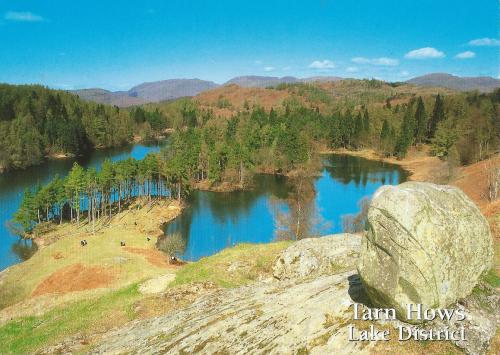
United Kingdom: The English Lake District

The Lake District, also known as the Lakes or Lakeland, is a mountainous region in North West England. A popular holiday destination, it is famous for its lakes, forests and mountains, and its associations with William Wordsworth and the other Lake Poets and with Beatrix Potter and John Ruskin. A National Park established in 1951 covers an area of 2,362 square kilometres.
Inscribed: 2017

Thanks to Ms Leena of Holland.

Sunday, May 22, 2016

United Kingdom: Palace of Westminster and Westminster Abbey including Saint Margaret’s Church

Westminster Palace, rebuilt from the year 1840 on the site of important medieval remains, is a fine example of neo-Gothic architecture. The site – which also comprises the small medieval Church of Saint Margaret, built in Perpendicular Gothic style, and Westminster Abbey, where all the sovereigns since the 11th century have been crowned – is of great historic and symbolic significance. Source: whs.unesco.org
Inscribed: 1987

Postcard 1: Palace of Westminster

Thanks to Ms Lana.
Postcard 2: Westminster Abbey


Friday, May 20, 2016

United Kingdom: Durham Castle and Cathedral (1986)

Durham Cathedral was built in the late 11th and early 12th centuries to house the relics of St Cuthbert (evangelizer of Northumbria) and the Venerable Bede. It attests to the importance of the early Benedictine monastic community and is the largest and finest example of Norman architecture in England. The innovative audacity of its vaulting foreshadowed Gothic architecture. Behind the cathedral stands the castle, an ancient Norman fortress which was the residence of the prince-bishops of Durham. Source: whs.unesco.org


Thanks to Ms Jemma

Wednesday, May 18, 2016

United Kingdom: Giant's Causeway and Causeway Coast (1986)

The Giant's Causeway lies at the foot of the basalt cliffs along the sea coast on the edge of the Antrim plateau in Northern Ireland. It is made up of some 40,000 massive black basalt columns sticking out of the sea. The dramatic sight has inspired legends of giants striding over the sea to Scotland. Geological studies of these formations over the last 300 years have greatly contributed to the development of the earth sciences, and show that this striking landscape was caused by volcanic activity during the Tertiary, some 50–60 million years ago. Source: whc.unesco.org
Inscribed: 1986

Thanks to Ms Nora.