Showing posts with label Germany UNESCO. Show all posts

Tuesday, July 15, 2025

Germany: The Palaces of King Ludwig II of Bavaria: Neuschwanstein, Linderhof, Schachen and Herrenchiemsee

This serial property consists of four grand palace complexes in Bavaria’s alpine region, built under King Ludwig II between 1864 and 1886. Designed as personal retreats and imaginative escapes, they reflect the romantic and eclectic spirit of the era. Drawing inspiration from the Wartburg Castle, Versailles, German fairy tales, and Wagner’s operas, the palaces showcase historicist styles and advanced 19th-century techniques. Carefully integrated into stunning natural landscapes, they embody Ludwig’s artistic vision. Opened to the public shortly after his death in 1886, these sites are now preserved as museums and remain major cultural landmarks. soure:whc.unesco.org
Inscribed: 2005


 Thanks to Crissi.

Tuesday, February 25, 2025

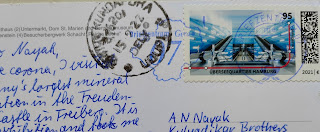
The Great Spa Towns of Europe


Austria-Belgium- Czechia- France-Germany-Italy- UK
This transnational property comprises 11 towns, located in seven European countries: Baden bei Wien (Austria); Spa (Belgium); Františkovy Lázně (Czechia); Karlovy Vary (Czechia); Mariánské Lázně (Czechia); Vichy (France); Bad Ems (Germany); Baden-Baden (Germany); Bad Kissingen (Germany); Montecatini Terme (Italy); and City of Bath (United Kingdom). All of these towns developed around natural mineral water springs. They bear witness to the international European spa culture that developed from the early 18th century to the 1930s, leading to the emergence of grand international resorts that impacted urban typology around ensembles of spa buildings such as the kurhaus and kursaal (buildings and rooms dedicated to therapy), pump rooms, drinking halls, colonnades and galleries designed to harness the natural mineral water resources and to allow their practical use for bathing and drinking. Related facilities include gardens, assembly rooms, casinos, theatres, hotels and villas, as well as spa-specific support infrastructure. These ensembles are all integrated into an overall urban context that includes a carefully managed recreational and therapeutic environment in a picturesque landscape. Together, these sites embody the significant interchange of human values and developments in medicine, science and balneology. source:whc.unesco.org

1. Austria- Baden Bei Wein- Received
2. Belgium- Spa
3. Czech Republic-Frantiskovy Lazne
4. Czech Republic- Karlovy Vary
5. Czech Republic- Marianske Lazne
6. France- Vichy- Received
7. Germany- Bad ems
8. Germany- Baden Baden
9. Germany- Bad Kissigen- Received
10. Italy- Montecatini Terme- Received
11. United Kingdom- Bath- Received
Inscribed: 2021

France- Vichy


Thanks to Ms Julie.

Austria- Baden Bei Wein


Thanks to MS Monika. 

United Kingdom -The City of Bath


Thanks to Ms Nat.
 Germany- Bad Kissingen


Thanks to Ms Svenja
Italy- Montecatini Terme

Thanks to Ms Martha Isabel

Wednesday, September 18, 2024

Germany: Frontiers of the Roman Empire – The Danube Limes (Western Segment)

It covers almost 600km of the whole Roman Empire’s Danube frontier. The property formed part of the much large frontier of the Roman Empire that encircled the Mediterranean Sea. The Danube Limes (Western Segment) reflects the specificities of this part of the Roman Frontier through the selection of sites that represent key elements from roads, legionary fortresses and their associated settlements to small forts and temporary camps, and the way these structures relate to local topography. source:whc.unesco.org
Inscribed: 2021 Extn 2024


Thanks to Mr Marcel. The card shows Northern gate of the Roman legionary camp "Casta Regina", built 179 A.D.
 

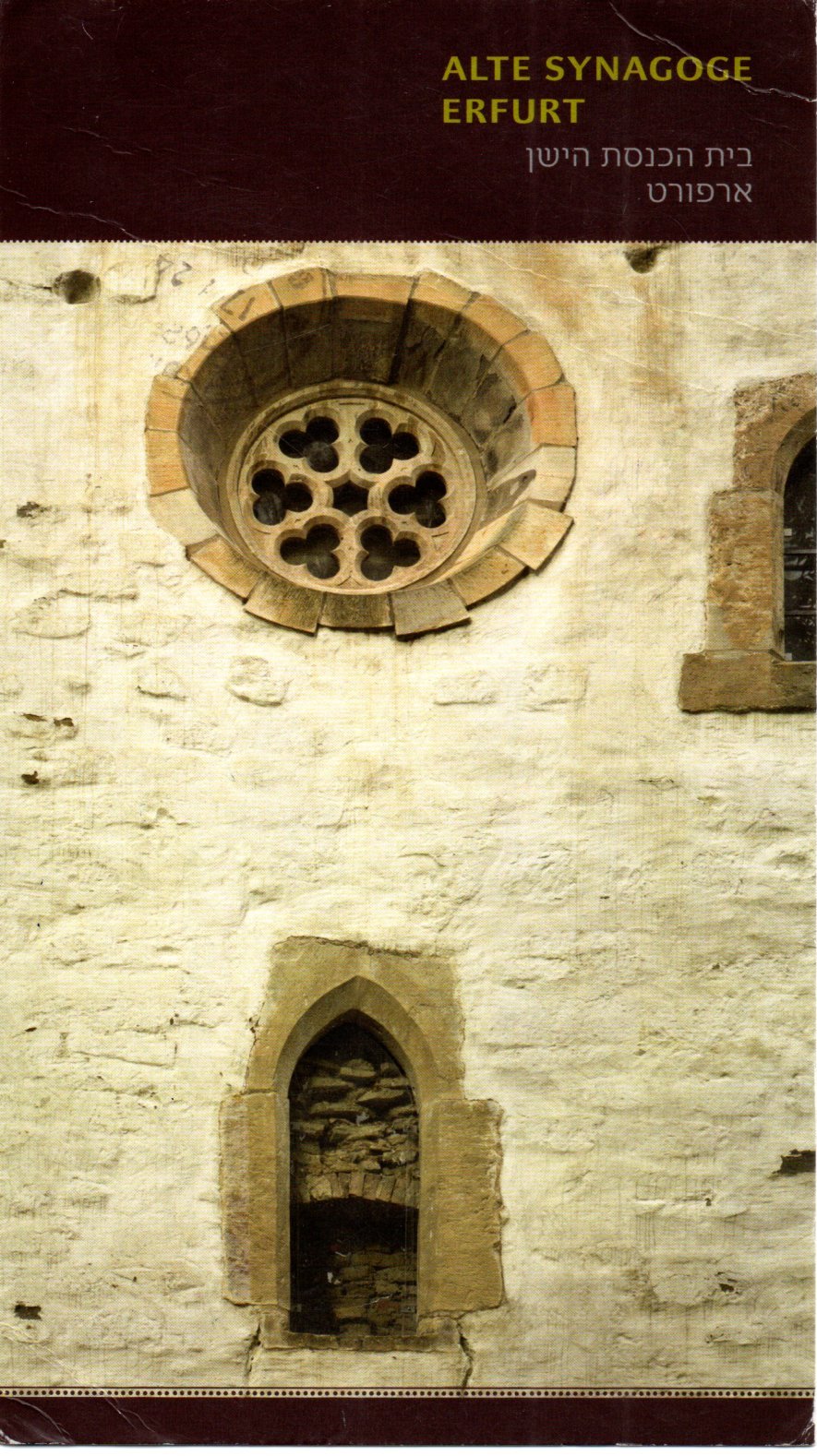
Germany: Jewish-Medieval Heritage of Erfurt

Located in the medieval historic centre of Erfurt, the capital city of Thuringia, the property comprises three monuments: the Old Synagogue, the Mikveh, and the Stone House. They illustrate the life of the local Jewish community and its coexistence with a Christian majority in Central Europe during the Middle Ages, between the end of the 11th and the mid-14th century. source:whc.unesco.org
Inscribed :2023


 Thanks to Mr Marcel

Tuesday, July 16, 2024

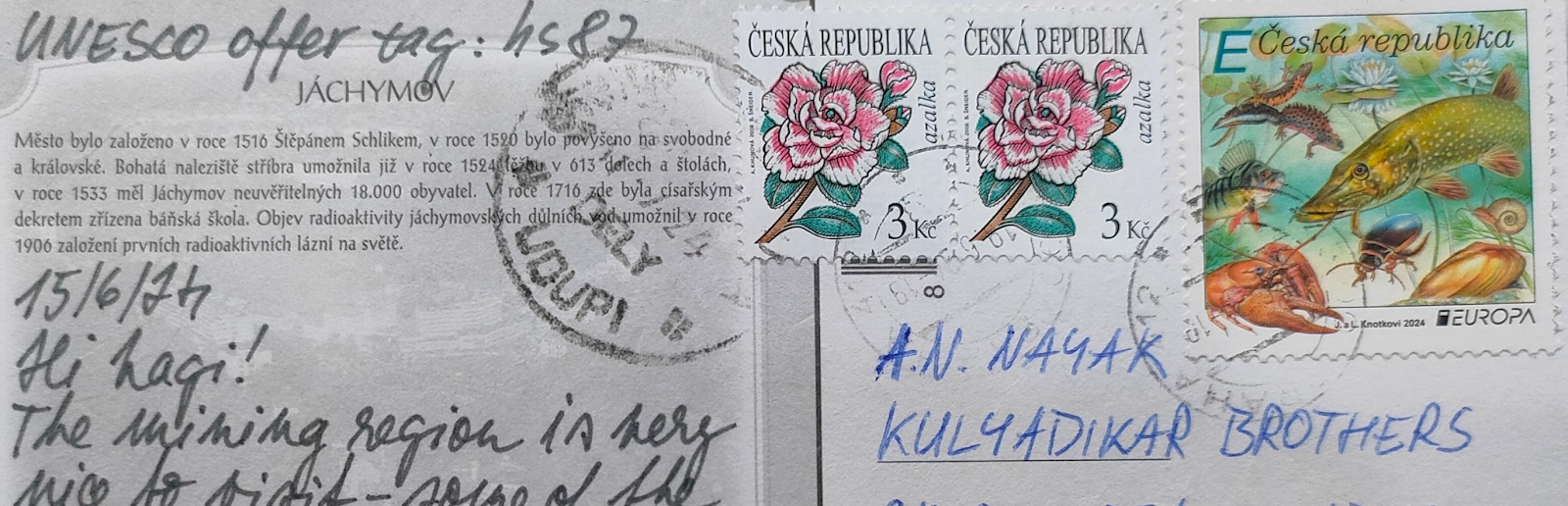
Germany/ Czech Republic: Erzgebirge/Krušnohoří Mining Region

Erzgebirge/Krušnohoří (Ore Mountains) spans a region in south-eastern Germany (Saxony) and north-western Czechia, which contains a wealth of several metals exploited through mining from the Middle Ages onwards. The region became the most important source of silver ore in Europe from 1460 to 1560. Mining was the trigger for technological and scientific innovations transferred worldwide. Tin was historically the second metal to be extracted and processed at the site. At the end of the 19th century, the region became a major global producer of uranium. The cultural landscape of the Ore Mountains has been deeply shaped by 800 years of almost continuous mining, from the 12th to the 20th century, with mining, pioneering water management systems, innovative mineral processing and smelting sites, and mining cities. Source:whc.unesco.org
Inscribed: 2019
Germany
1. Dippoldiswalde Medieval Silver Mines
2. Altenberg-Zinnwald Mining Landscape
3. Lauenstein Administrative Centre
4. Freiberg Mining Landscape- Received
5. Hoher Forst Mining Landscape
6. Schneeberg Mining Landscape
7. Schindlers Werk Smalt Works
8. Annaberg-Frohnau Mining Landscape
9. Pöhlberg Mining Landscape
10. Buchholz Mining Landscape
11. Marienberg Mining Town
12. Lauta Mining Landscape
13. Ehrenfriedersdorf Mining Landscape
14. Grünthal Silver-Copper Liquation Works
15. Eibenstock Mining Landscape
16. Rother Berg Mining Landscape
17. Uranium Mining Landscape

Czech Republic
1. Jáchymov Mining Landscape- Received
2. Abertamy Bozi Dar Horni Blatna – Mining Landscape
3. The Red Tower of Death in Ostrov
4. Krupka Mining Landscape
5. Mědník Hill Mining Landscape in Měděnec

Germany: Freiberg


Thanks to Ms Sylvia

Czech Republic: Jachymov


Thanks to Ms Helena.


Monday, July 15, 2024

Netherlands/ Germany: Frontiers of the Roman Empire – The Lower German Limes

Following the left bank of the Lower Rhine River for approximately 400 km from the Rhenish Massif in Germany to the North Sea coast in the Netherlands, the transnational property consist of 102 components from one section of the frontiers of the Roman Empire, which in the 2nd century CE, stretched across Europe, the Near East, and North Africa, over 7,500 km. The property comprises military and civilian sites and infrastructure that marked the edge of Lower Germany from the 1st to 5th centuries CE. Archaeological remains in the property include military bases, forts, fortlets, towers, temporary camps, roads, harbours, a fleet base, a canal, and an aqueduct, as well as civilian settlements, towns, cemeteries, sanctuaries, an amphitheatre, and a palace. Almost all of these archaeological remains are buried underground. Waterlogged deposits in the property have enabled a high degree of preservation of both structural and organic materials from the Roman periods of occupation and use.
source:whc.unesco.org
Inscribed: 2021

Postcard 1: Xanten (Germany)


Postcard 2: Nijmegen, Netherlands


Thanks to Ms Jeroen.
Postcard 3: Netherlands


Thanks to Mr Javier.

Tuesday, July 5, 2022

United Kingdom/ Germany: Frontiers of the Roman Empire

The ‘Roman Limes’ represents the border line of the Roman Empire at its greatest extent in the 2nd century AD. It stretched over 5,000 km from the Atlantic coast of northern Britain, through Europe to the Black Sea, and from there to the Red Sea and across North Africa to the Atlantic coast. The remains of the Limes today consist of vestiges of built walls, ditches, forts, fortresses, watchtowers and civilian settlements. Certain elements of the line have been excavated, some reconstructed and a few destroyed. The two sections of the Limes in Germany cover a length of 550 km from the north-west of the country to the Danube in the south-east. The 118-km-long Hadrian’s Wall (UK) was built on the orders of the Emperor Hadrian c. AD 122 at the northernmost limits of the Roman province of Britannia. It is a striking example of the organization of a military zone and illustrates the defensive techniques and geopolitical strategies of ancient Rome. The Antonine Wall, a 60-km long fortification in Scotland was started by Emperor Antonius Pius in 142 AD as a defense against the “barbarians” of the north. It constitutes the northwestern-most portion of the Roman Limes. Source: whc.unesco.org
Inscribed: 1987 Ext: 2005,2008

Postcard 1: Hardins Wall, UK
Thanks to Mr Smith
Postcard 2: Saalburg, Germany

Thanks to Marlo.
Postcard 3: Saalburg, Germany

Thanks to Ms Ana.

Germany: Wartburg Castle

Wartburg Castle blends superbly into its forest surroundings and is in many ways 'the ideal castle'. Although it has retained some original sections from the feudal period, the form it acquired during the 19th-century reconstitution gives a good idea of what this fortress might have been at the height of its military and seigneurial power. It was during his exile at Wartburg Castle that Martin Luther translated the New Testament into German. Source: whc.unesco.org
Inscribed: 1999

Postcard 1: Castle

Thanks to Daj.
Postcard 2: Multiview

Thanks to Ms Annett.
Postcard 3: Inside View

Thanks to Ms Sylvia

Monday, October 18, 2021

Germany: Mathildenhöhe Darmstadt

The Darmstadt Artists’ Colony on Mathildenhöhe, the highest elevation above the city of Darmstadt in west-central Germany, was established in 1897 by Ernst Ludwig, Grand Duke of Hesse, as a centre for emerging reform movements in architecture, arts and crafts. The buildings of the colony were created by its artist members as experimental early modernist living and working environments. The colony was expanded during successive international exhibitions in 1901, 1904, 1908 and 1914. Today, it offers a testimony to early modern architecture, urban planning and landscape design, all of which were influenced by the Arts and Crafts movement and the Vienna Secession. The serial property consists of two component parts including 23 elements, such as the Wedding Tower (1908), the Exhibition Hall (1908), the Plane Tree Grove (1833, 1904-14), the Russian Chapel of St. Maria Magdalena (1897-99), the Lily Basin, the Gottfried Schwab Memorial (1905), the Pergola and Garden (1914), the “Swan Temple” Garden Pavilion (1914), the Ernst Ludwig Fountain, and the 13 houses and artists’ studios that were built for the Darmstadt Artists’ Colony and for the international exhibitions. A Three House Group, built for the 1904 exhibition is an additional component. source:whc.unesco.org
Inscribed: 2021


Thanks to Ms Doris.

Thursday, September 23, 2021

Germany: ShUM Sites of Speyer, Worms and Mainz

Located in the former Imperial cathedral cities of Speyer, Worms and Mainz, in the Upper Rhine Valley, the serial site of Speyer, Worms and Mainz comprise the Speyer Jewry-Court, with the structures of the synagogue and women’s shul (Yiddish for synagogue), the archaeological vestiges of the yeshiva (religious school), the courtyard and the still intact underground mikveh (ritual bath), which has retained its high architectural and building quality. The property also comprises the Worms Synagogue Compound, with its in situ post-war reconstruction of the 12th century synagogue and 13th century women’s shul, the community hall (Rashi House), and the monumental 12th-century mikveh. The series also includes the Old Jewish Cemetery in Worms and the Old Jewish Cemetery in Mainz. The four component sites tangibly reflect the early emergence of distinctive Ashkenaz customs and the development and settlement pattern of the ShUM communities, particularly between the 11th and the 14th centuries. The buildings that constitute the property served as prototypes for later Jewish community and religious buildings as well as cemeteries in Europe. The acronym ShUM stands for the Hebrew initials of Speyer, Worms and Mainz. source:whc.unesco.org
Inscribed: 2021


Thanks to Ms Svenja.
 

Wednesday, September 22, 2021

Germany: Speyer Cathedral

Speyer Cathedral, a basilica with four towers and two domes, was founded by Conrad II in 1030 and remodelled at the end of the 11th century. It is one of the most important Romanesque monuments from the time of the Holy Roman Empire. The cathedral was the burial place of the German emperors for almost 300 years. Source: whc.unesco.org
Inscribed: 1981
Postcard 1


Thanks to Ms Ms Kestin Siltinger.
Postcard 2


Thanks to Andrea.

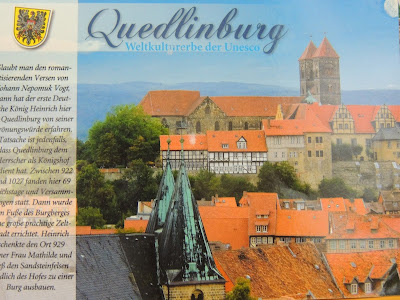
Germany: Collegiate Church, Castle and Old Town of Quedlinburg

Quedlinburg, in the Land of Sachsen-Anhalt, was a capital of the East Franconian German Empire at the time of the Saxonian-Ottonian ruling dynasty. It has been a prosperous trading town since the Middle Ages. The number and high quality of the timber-framed buildings make Quedlinburg an exceptional example of a medieval European town. The Collegiate Church of St Servatius is one of the masterpieces of Romanesque architecture. source:whc.unesco.org
Inscribed: 1994
Postcard 1

Thanks to Ms Igenbourg.
Postcard 2


Thanks to Ms Brigitte.

Monday, August 30, 2021

Germany: Naumburg Cathedral

 Located in the eastern part of the Thuringian Basin, the Cathedral of Naumburg, whose construction began in 1028, is an outstanding testimony to medieval art and architecture. Its Romanesque structure, flanked by two Gothic choirs, demonstrates the stylistic transition from late Romanesque to early Gothic. The west choir, dating to the first half of the 13th century, reflects changes in religious practice and the appearance of science and nature in the figurative arts. The choir and life-size sculptures of the founders of the Cathedral are masterpieces of the workshop known as the ‘Naumburg Master’. source:whc.unesco.org
Inscribed: 2018

Thanks to Ms Ina.
Postcard 2


Thanks to Ms Lea.