Showing posts with label Poland UNESCO. Show all posts

Sunday, January 5, 2025

Poland: Centennial Hall in Wrocław

The Centennial Hall, a landmark in the history of reinforced concrete architecture, was erected in 1911-1913 by the architect Max Berg as a multi-purpose recreational building, situated in the Exhibition Grounds. In form it is a symmetrical quatrefoil with a vast circular central space that can seat some 6,000 persons. The 23m-high dome is topped with a lantern in steel and glass. The Centennial Hall is a pioneering work of modern engineering and architecture, which exhibits an important interchange of influences in the early 20th century, becoming a key reference in the later development of reinforced concrete structures. Source:whc.unesco.org
Inscribed: 2006


Thanks to Mr Sebastian.

Postcard 2


Thanks to Joanne

Friday, December 13, 2024

Poland: Castle of the Teutonic Order of Malbork

The Castle of the Teutonic Order in Malbork, located in the Polish town of Malbork, is the largest castle in the world measured by land area. It was originally built by the Teutonic Knights, a German Roman Catholic religious order of crusaders, in a form of an Ordensburg fortress. The castle is a classic example of a medieval fortress and, on its completion in 1406, was the world's largest brick castle. Source: Wikipedia
Inscribed: 1997
Postcard 1: Multiview


Thanks to Mr Boguslaw .S
    Postcard 2: Malbork Castle

Thanks to Ms Margarita of Spain

Monday, February 14, 2022

Poland: Wieliczka and Bochnia Royal Salt Mines

The deposit of rock salt in Wieliczka and Bochnia has been mined since the 13th century. This major industrial undertaking has royal status and is the oldest of its type in Europe. The site is a serial property consisting of Wieliczka and Bochnia salt mines and Wieliczka Saltworks Castle. The Wieliczka and Bochnia Royal Salt Mines illustrate the historic stages of the development of mining techniques in Europe from the 13th to the 20th centuries: both mines have hundreds of kilometers of galleries with works of art, underground chapels and statues sculpted in the salt, making a fascinating pilgrimage into the past. The mines were administratively and technically run by Wieliczka Saltworks Castle, which dates from the medieval period and has been rebuilt several times in the course of its history. Source: whc.unesco.org
Inscribed: 1978 Ext: 2008,2013

Postcard 1: Bochnia Salt Mines

Thanks to Mr Sebastian
Postcard 2: Wieliczka Salt Mines

Thanks to Ms Ania.

Thursday, August 1, 2019

Poland: Krzemionki Prehistoric Striped Flint Mining Region

Located in the mountain region of Świętokrzyskie, Krzemionki is an ensemble of four mining sites, dating from the Neolithic to the Bronze Age (about 3900 to 1600 BCE), dedicated to the extraction and processing of striped flint, which was mainly used for axe-making. With its underground mining structures, flint workshops and some 4,000 shafts and pits, the property features one of the most comprehensive prehistoric underground flint extraction and processing systems identified to date. The property provides information about life and work in prehistoric settlements and bears witness to an extinct cultural tradition. It is an exceptional testimony of the importance of the prehistoric period and of flint mining for tool production in human history. Source:whc.unesco.org
Inscribed: 2019


Thanks to Mr Bordex

Wednesday, October 3, 2018

Poland: Churches of Peace in Jawor and Świdnica

The Churches of Peace in Jawor and Świdnica in Silesia were named after the Peace of Westphalia of 1648.
It permitted the Lutherans in the Roman Catholic parts of Silesia to build three churches from wood, loam and straw outside the city walls, without steeples and church bells. The construction time was limited to one year. Despite the physical and political constraints, three of the churches became the biggest timber-framed religious buildings in Europe due to pioneering constructional and architectural solutions.Source:whc.unesco.org
Inscribed: 2001

Postcard 1: Jawor

Thanks to Mr Bodexs
Postcard 2: Swidnica


Thanks to Ms Monika

Thursday, May 3, 2018

Poland/ Ukraine: Wooden Tserkvas of the Carpathian Region in Poland and Ukraine

Situated in the eastern fringe of eastern Europe, the transnational property numbers a selection of 16 tserkvas, churches, built of horizontal wooden logs between the 16th and 19th centuries by communities of the Eastern Orthodox and Greek Catholic faiths. They represent the cultural expression of four ethnographic groups and the formal, decorative and technical characteristics they developed over time. The tserkvas bear testimony to a distinct building tradition rooted in Orthodox ecclesiastic design interwoven with elements of local tradition, and symbolic references to their communities’ cosmogony. The tserkvas are built on a tri-partite plan surmounted by open quadrilateral or octagonal domes and cupolas. They feature wooden bell towers, iconostasis screens, and interior polychrome decorations as well as churchyards, gatehouses and graveyards.
Inscribed: 2013

POLAND:
- Brunary Wyżne-Tserkva of Saint Michael the Archangel 
- Chotyniec-Tserkva of the Birth of the Blessed Virgin Mary 
- Kwiatoń-Tserkva of Saint Paraskeva 
- Owczary-Tserkva of Our Lady’s Protection 
- Powroźnik-Tserkva of Saint James the Less, the Apostle 
- Radruż-Tserkva of Saint Paraskeva 
- Smolnik-Tserkva of Saint Michael the Archangel- Received
- Turzańsk-Tserkva of Saint Michael the Archangel 

UKRAINE:
- Drohobych-Tserkva of Saint George 
- Matkiv-Tserkva of the Synaxis of the Blessed Virgin Mary 
- Nyzhniy Verbizh-Tserkva of the Nativity of Blessed Virgin Mary 
- Potelych-Tserkva of the Descent of the Holy Spirit 
- Rohatyn-Tserkva of the Descent of the Holy Spirit- Received
- Uzhok-Tserkva of the Synaxis of the Archangel Michael 
- Yasynia-Tserkva of Our Lord’s Ascension 
- Zhovkva-Tserkva of the Holy Trinity"

Poland- Tserkva of Saint Michael the Archangel

Thanks to Sylevic

Ukraine- Decent of the Holy Spirit Church, Rohatyn

Thanks to Ms Kseniya

Poland/ Belarus: Belovezhskaya Pushcha / Białowieża Forest

Białowieża Forest is one of the last and largest remaining parts of the immense primeval forest that once stretched across the European Plain. The forest is home to 800 European bison, Europe's heaviest land animal. The World Heritage Committee by its decision of June 2014 approved the extension of the UNESCO World Heritage site “Belovezhskaya Pushcha/Białowieża Forest, Belarus, Poland”, which became “Białowieża Forest, Belarus, Poland”. It straddles the border between Poland and Belarus, and is 70 kilometres north of Brest, Belarus and 62 kilometres southeast of Białystok, Poland. The Białowieża Forest World Heritage site covers a total area of 141,885 ha. Since the border between the two countries runs through the forest, there is a border crossing available for hikers and cyclists.
Inscribed: 1979 Ext: 1992, 2014

Poland- Postcard 1

Thanks to "Ania Postcrossing"

Poland- Postcard 2

Thanks to Mr Boguslaw

Belarus

Thanks to Ms Tanya

Friday, November 3, 2017

Germany/ Poland: Muskauer Park / Park Mużakowski

Muskau Park is a landscape park in the Upper Lusatia region of Germany and Poland. It is the largest and one of the most famous English gardens in Central Europe, stretching along both sides of the German–Polish border on the Lusatian Neisse. The park was laid out from 1815 onwards at the behest of Prince Hermann von Pückler-Muskau (1785–1871), centered on his Schloss Muskau residence.
Inscribed: 2004
Germany


Thanks to Mr Edith.
Poland

Thanks to Mr Boguslaw

Poland: Tarnowskie Góry Lead-Silver-Zinc Mine and its Underground Water Management System

The Historic Silver Mine, (Polish: Zabytkowa Kopalnia Srebra), is a mining museum in Tarnowskie Góry, in Silesia in Poland. The mine and the neighbouring Black Trout Adit are remnants of a silver mining industry. The museum is an Anchor point on the European Route of Industrial Heritage.
Inscribed: 2017


Thanks to Mr Bordex.

Sunday, May 28, 2017

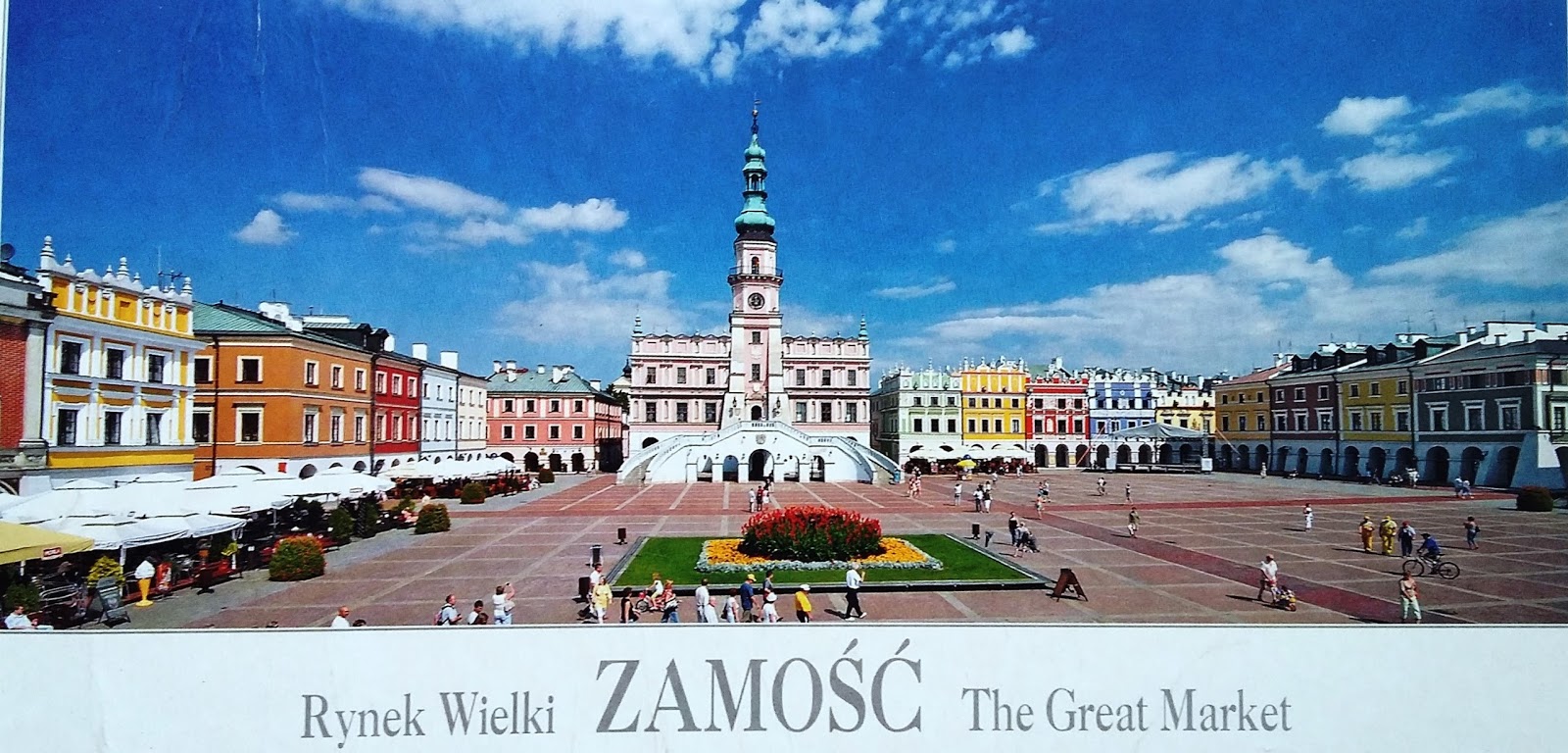
Poland: Old City of Zamość

The osiedle Old City is the oldest historic district of the city of Zamość. According to UNESCO, this monument value lies in it being "an outstanding example of a Renaissance planned town of the late 16th century, which retains its original layout and fortifications and a large number of buildings of particular interest, blending Italian and Central European architectural traditions.". The Medieval Town has an area of 75 ha and a buffer zone of 200 ha. The district was named one of Poland's official national Historic Monuments(Pomnik historii), as designated September 16, 1994. Its listing is maintained by the National Heritage Board of Poland. Source: Wikipedia
Inscribed: 1992


Thanks to Ms Eva

Poland: Medieval Town of Torun

Toruń is a city in northern Poland, on the Vistula River. Toruń is one of the oldest cities in Poland, having been established in 1233 by the Teutonic Knights. Believed to be one of the most beautiful cities in Europe,Toruń is renowned for the Museum of Gingerbread, whose baking tradition dates back nearly a millennium, and its large Cathedral. Source: Wikipedia
Inscribed: 1997

Postcard 1: Old Town Hall

Thanks to Ms Slymail.
Postcard 2: Multi view

Thanks to Ms Kasia

Friday, February 6, 2015

Poland: Wooden Churches of Southern Małopolska

The wooden churches of southern Małopolska represent outstanding examples of the different aspects of medieval church-building traditions in Roman Catholic culture. They were built using the horizontal log technique, common in eastern and northern Europe since the Middle Ages.
These unique churches with old paintings and sculptures were sponsored by noble families: 
Binarowa (ca 1500), 
Blizne (mid 15thcentury.), 
Dębno (1335), 
Haczów (14th/15th century)- Received
Lipnica Murowana (end of 15th century), 
Sękowa (1520).
St Michael the Archangel’s Church in Binarowa and All Saints’ Church in Blizne are decorated with polychrome and valuable furnishings. Over the centuries, St Michael the Archangel’s Church in Debno Podhalanskie has kept its Gothic appearance, which is now its distinctive hallmark. The Church of the Assumption of the Virgin Mary in Haczow is in turn the biggest wooden temple in Europe. The UNESCO list also includes St Leonard’s Church in Lipnica Murowana, and the Church of St Philip and St James the Apostles. The latter, sometimes referred to as the Gem of the Lower Beskids, is considered by many to be the most beautiful wooden church in Malopolska.
The complete Trail of Wooden Architecture in Malopolska is 1,500 km long. Source: Wikipedia.
Inscribed: 2003


Thanks to Mr Lukasz.

Sunday, September 7, 2014

Poland: Historic Centre of Kraków

The Historic Centre of Kraków, the former capital of Poland, is situated at the foot of the Royal Wawel Castle. The 13th-century merchants' town has Europe's largest market square and numerous historical houses, palaces and churches with their magnificent interiors. Further evidence of the town's fascinating history is provided by the remnants of the 14th-century fortifications and the medieval site of Kazimierz with its ancient synagogues in the southern part of town, Jagellonian University and the Gothic cathedral where the kings of Poland were buried. Source:whc.unesco.org
Inscribed: 1978

Postcard 1: Wawel Cathedral

Thanks to Dr Kiran Acharya

Postcard 2: Multi View

Thanks to Mr Boguslaw

Postcard 3: The Old Town Hall

Thanks to Ms Anjela.

Wednesday, August 27, 2014

Poland: Kalwaria Zebrzydowska: the Mannerist Architectural and Park Landscape Complex and Pilgrimage Park

Kalwaria Zebrzydowska is a breathtaking cultural landscape of great spiritual significance. Its natural setting – in which a series of symbolic places of worship relating to the Passion of Jesus Christ and the life of the Virgin Mary was laid out at the beginning of the 17th century – has remained virtually unchanged. It is still today a place of pilgrimage. Source: whc.unesco.org
Inscribed: 1999


Thanks to Mr Boguslaw

Tuesday, July 8, 2014

Poland: Historic Center of Warsaw

Postcard 1: Multiview

 Thanks to Ms Patricia
Postcard 2: Saxon Palace

 Thanks to Dr kiran Acharya.
Postcard 3: Multiview
Thanks to Ms Sasha.
Postcard 4: Multiview

Thanks to Klimen. The card shows Piwana street, Palace of Culture and science, Old town Market Square, Nowomiejska Street.