Showing posts with label Switzerland UNESCO. Show all posts

Friday, March 15, 2019

The Architectural Work of Le Corbusier, an Outstanding Contribution to the Modern Movement

Argentina-Belgium-France-Germany-India-Japan-Switzerland
Chosen from the work of Le Corbusier, the 17 sites comprising this transnational serial property are spread over seven countries and are a testimonial to the invention of a new architectural language that made a break with the past. They were built over a period of a half-century, in the course of what Le Corbusier described as “patient research”. The Complexe du Capitole in Chandigarh (India), the National Museum of Western Art, Tokyo (Japan), the House of Dr Curutchet in La Plata (Argentina) and the Unité d’habitation in Marseille (France) reflect the solutions that the Modern Movement sought to apply during the 20th century to the challenges of inventing new architectural techniques to respond to the needs of society. These masterpieces of creative genius also attest to the internationalization of architectural practice across the planet. Source:whc.unesco.org
Inscribed: 2016

INDIA:
1) Complexe du Capitole-Received
JAPAN:
2) Musée National des Beau-Arts de l’Occident -Received
BELGIUM:
3) Maison Guiete- Received
GERMANY:
4) Maisons de la Weissenhof-Siedlung-Received
FRANCE:
5) Chapelle Notre-Dame-du-Haut de Ronchamp
6) Unité d’habitation Marseille
7) Maisons La Roche et Jeanneret 
8) Cité Frugès 
9) Villa Savoye et loge du jardiner 
10) Immeuble locatif à la Porte Molitor 
11) La Manufacture à Saint- Dié 
12) Cabanon de Le Corbusier 
13) Couvent Sainte-Marie-de-la-Tourette 
14) Maison de la Culture de Firminy 
SWITZERLAND:
15) Petite villa au bord du lac Léman- Received
16) Immeuble Clarté 
ARGENTINA:
17) Maison du docteur Curutchet

India: Complexe du Capitole


Thanks to Mr Sanket.

Japan: Musée National des Beaux-Arts de l’Occident


Thanks to Ms Bie Hao. 

Japan: Musée National des Beaux-Arts de l’Occident


Thanks to Ms Seeta.
Belgium: Maison Guiete


Thanks to Mr Zavier who was visiting Belgium.

Germany: Maisons de la Weissenhof-Siedlung


Thanks to Ms Steffi.

Germany: Maisons de la Weissenhof-Siedlung (Outer View, Bottom Left)


France: Showing all the Sites around the world including France


Thanks to Mr Zavier of Spain.This postcard issued by Le Corbusier foundation.

Switzerland: Petite villa au bord du lac Léman

Thanks to Mr Oscar.

Wednesday, May 17, 2017

Switzerland: Benedictine Convent of St John at Müstair

The Convent of Müstair, which stands in a valley in the Grisons, is a good example of Christian monastic renovation during the Carolingian period. It has Switzerland's greatest series of figurative murals, painted c. A.D. 800, along with Romanesque frescoes and stuccoes. Source:whc.unesco.org
Inscribed:1983


Thanks to Ms Joana

Saturday, April 16, 2016

Switzerland: Three Castles, Defensive Wall and Ramparts of the Market-Town of Bellinzona

The Bellinzona site consists of a group of fortifications grouped around the castle of Castelgrande, which stands on a rocky peak looking out over the entire Ticino valley. Running from the castle, a series of fortified walls protect the ancient town and block the passage through the valley. A second castle (Montebello) forms an integral part of the fortifications, while a third but separate castle (Sasso Corbaro) was built on an isolated rocky promontory south-east of the other fortifications. Source:whc.unesco.org
Inscribed: 2000

Postcard 1 : Castle Grande, Bellinzona

Thanks to Ms Ania.
Postcard 2: Defensive Wall


Thanks to Mr Oscar.

Friday, May 22, 2015

Prehistoric Pile dwellings around the Alps (2011)

Austria-France-Germany-Italy-Slovenia-Switzerland

This serial property of 111 small individual sites encompasses the remains of prehistoric pile-dwelling (or stilt house) settlements in and around the Alps built from around 5000 to 500 B.C. on the edges of lakes, rivers or wetlands. Excavations, only conducted in some of the sites, have yielded evidence that provides insight into life in prehistoric times during the Neolithic and Bronze Age in Alpine Europe and the way communities interacted with their environment. Fifty-six of the sites are located in Switzerland. The settlements are a unique group of exceptionally well-preserved and culturally rich archaeological sites, which constitute one of the most important sources for the study of early agrarian societies in the region. Source: whc.unesco.org
Inscribed: 2011

Austria-Pfahlbaumusem Mondsee


Thanks to Ms Christina.
Austria

Thanks to Ms Sara.
Austria

Thanks to Ms Sara.
Italy: Biandronno


Thanks to Gosia.
Germany: Bondsee


Thanks to Ms Anja.
Slovenia

Thanks to Mr Javier.
Switzerland: Underwater Site remains.


Thanks to Ms Zasa

Thursday, May 21, 2015

Italy/ Switzerland: Monte San Georgio

The pyramid-shaped, wooded mountain of Monte San Giorgio beside Lake Lugano is regarded as the best fossil record of marine life from the Triassic Period (245–230 million years ago). The sequence records life in a tropical lagoon environment, sheltered and partially separated from the open sea by an offshore reef. Diverse marine life flourished within this lagoon, including reptiles, fish, bivalves, ammonites, echinoderms and crustaceans. Because the lagoon was near land, the remains also include land-based fossils of reptiles, insects and plants, resulting in an extremely rich source of fossils. Source:whc.unesco.org
Inscribed: 2003

Postcard 1: Switzerland


Thanks to Mr Oscar
Postcard 2: Italy


The postcard is from Paleontological Musuem in University of Zurich. The University of Zurich's Paleontological Museum exhibits one of the world's most important collections of marine reptiles and fish from the middle Triassic time, about 235 to 245 million years ago. These and the extraordinarily well-preserved and scientifically valuable fossils from Monte San Giorgio.
Thanks to Ms Moine of Italy.

Thursday, January 8, 2015

Switzerland: La Chaux-de-Fonds / Le Locle, Watchmaking Town Planning

The site of La Chaux-de-Fonds / Le Locle watchmaking town-planning consists of two towns situated close to one another in a remote environment in the Swiss Jura mountains, on land ill-suited to farming. Their planning and buildings reflect watchmakers’ need of rational organization. Planned in the early 19th century, after extensive fires, the towns owed their existence to this single industry. Their layout along an open-ended scheme of parallel strips on which residential housing and workshops are intermingled reflects the needs of the local watchmaking culture that dates to the 17th century and is still alive today. The site presents outstanding examples of mono-industrial manufacturing-towns which are well preserved and still active. The urban planning of both towns has accommodated the transition from the artisanal production of a cottage industry to the more concentrated factory production of the late 19th and 20th centuries. The town of La Chaux-de-Fonds was described by Karl Marx as a “huge factory-town” in Das Kapital where he analyzed the division of labour in the watchmaking industry of the Jura. Source: whc.unesco.org
Inscribed: 2009


Thanks to Mr Oscar.

Switzerland: Swiss Tectonic Arena Sardona

The Swiss Tectonic Arena Sardona in the north-eastern part of the country covers a mountainous area of 32,850 ha which features seven peaks that rise above 3,000 m. The area displays an exceptional example of mountain building through continental collision and features.excellent geological sections through tectonic thrust, i.e. the process whereby older, deeper rocks are carried onto younger, shallower rocks. The site is distinguished by the clear three-dimensional exposure of the structures and processes that characterize this phenomenon and has been a key site for the geological sciences since the 18th century. The Glarus Alps are glaciated mountains rising dramatically above narrow river valleys and are the site of the largest post-glacial landslide in the Central Alpine region. source:whc.unesco.org
Inscribed: 2008


Thanks to Zasa.

Switzerland: Abbey of St Gall

The Convent of St Gall, a perfect example of a great Carolingian monastery, was, from the 8th century to its secularization in 1805, one of the most important in Europe. Its library is one of the richest and oldest in the world and contains precious manuscripts such as the earliest-known architectural plan drawn on parchment. From 1755 to 1768, the conventual area was rebuilt in Baroque style. The cathedral and the library are the main features of this remarkable architectural complex, reflecting 12 centuries of continuous activity. souce: whc.unesco.org
Inscribed: 1983


Thanks to Ms Lisa

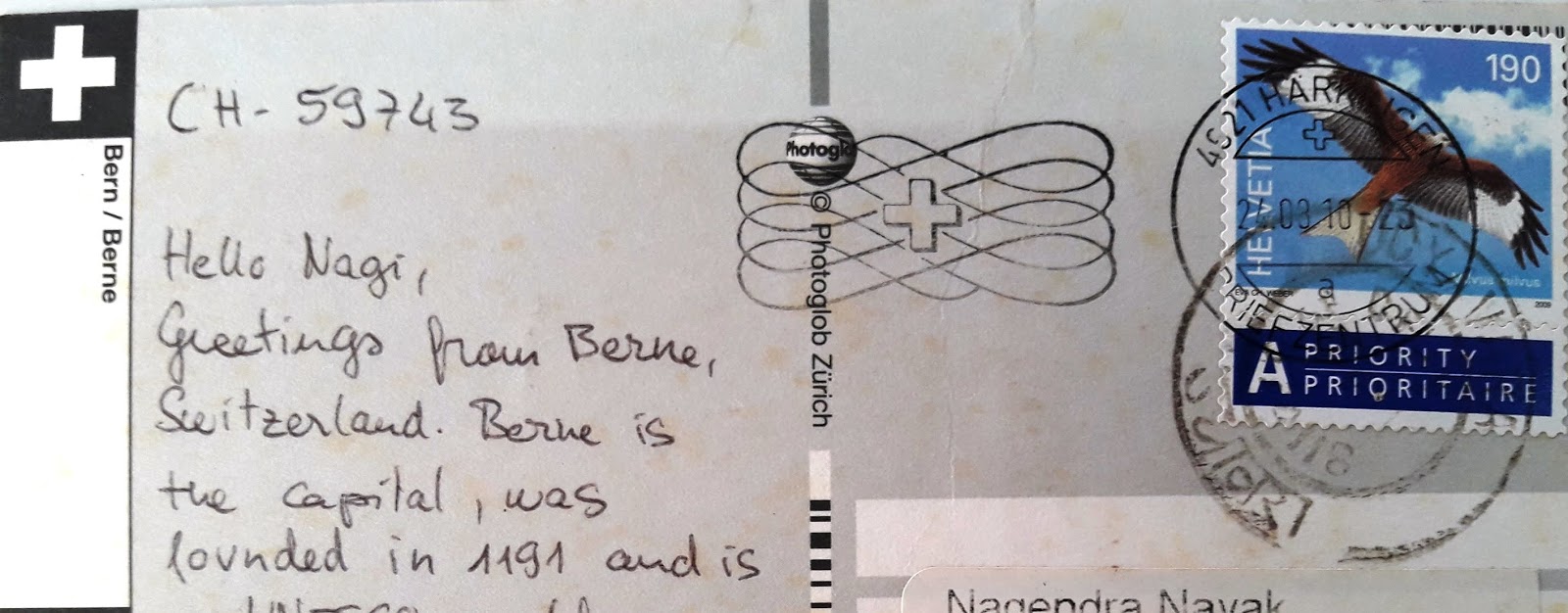
Switzerland: Old City of Berne

The Convent of St Gall, a perfect example of a great Carolingian monastery, was, from the 8th century to its secularization in 1805, one of the most important in Europe. Its library is one of the richest and oldest in the world and contains precious manuscripts such as the earliest-known architectural plan drawn on parchment. From 1755 to 1768, the conventual area was rebuilt in Baroque style. The cathedral and the library are the main features of this remarkable architectural complex, reflecting 12 centuries of continuous activity. source: whc.unesco.org
Inscribed: 1983


Thanks to Catherine.

Switzerland: Swiss Alps Jungfrau-Aletsch

The extension of the natural World Heritage property of Jungfrau - Aletsch - Bietschhorn (first inscribed in 2001), expands the site to the east and west, bringing its surface area up to 82,400 ha., up from 53,900. The site provides an outstanding example of the formation of the High Alps, including the most glaciated part of the mountain range and the largest glacier in Eurasia. It features a wide diversity of ecosystems, including successional stages due particularly to the retreat of glaciers resulting from climate change. The site is of outstanding universal value both for its beauty and for the wealth of information it contains about the formation of mountains and glaciers, as well as ongoing climate change. It is also invaluable in terms of the ecological and biological processes it illustrates, notably through plan succession. Its impressive landscape has played an important role in European art, literature, mountaineering and alpine tourism. Source: whc.unesco.org
Inscribed: 2001 Ext: 2007

Postcard 1- Jungfrau

Thanks to Ms Venessa
Postcard 2: Jungfrau

Thanks to my friend Mr Prashanth Baliga for posting it from Jungfrau with Jungfrau cancellation.

Postcard 3- Aletsch

Thanks to Ms Venessa

Switzerland/ Italy: Rhaetian Railway in the Albula / Bernina Landscapes


Thanks to Mr Oscar.