Showing posts with label = Intangible Cultural Asia. Show all posts

Wednesday, December 4, 2024

Bahrain, Egypt, Iraq, Jordan, Kuwait, Mauritania, Morocco, Oman, Palestine, Saudi Arabia, Sudan, Tunisia, United Arab Emirates and Yemen -Date palm, knowledge, skills, traditions and practices

The date palm has been connected to the regional population of the submitting States for centuries, serving both as the source of numerous associated crafts, professions and social and cultural traditions, customs and practices, and as a key form of nutrition. The date palm is an evergreen plant typically associated with dry climates, where the roots of the plant penetrate deeply into the earth in search of humidity. Bearers and practitioners include date palm farm owners, farmers who plant, nurture and irrigate the date palm offshoots, craftspeople who produce traditional products using various parts of the palm tree, date traders, creative individuals and performers of associated folkloric tales and poems. The Date palm, knowledge, skills, traditions and practices have played a pivotal role in strengthening the connection between people and the land in the Arab region, helping them face the challenges of the harsh desert environment. This historic relationship in the region and the element has produced a rich cultural heritage of related practices between people in the region, knowledge and skills maintained to this day. The cultural relevance and proliferation of the element over the centuries prove how committed the local communities are to sustaining it; this is achieved through collective participation in multiple date-palm related activities and numerous festive rituals, traditions and customs.

Postcard: Oman


Friday, July 24, 2015

South Korea: Royal ancestral ritual in the Jongmyo shrine and its music

"The Jongmyo Shrine in Seoul is the setting for a Confucian ritual dedicated to the ancestors of the Joseon dynasty (14th to the 19th century) that encompasses song, dance and music. The ritual is practised once a year on the first Sunday in May and is organized by the descendants of the royal family. It offers a unique example of a Confucian ritual, which is no longer celebrated in China. The tradition is inspired by classical Chinese texts concerning the cult of ancestors and the notion of filial piety. It also includes a prayer for the eternal peace of the ancestors’ spirits in a shrine conceived as their spiritual resting place. The order of the ceremony was defined in the fifteenth century and most elements have remained unchanged until today. During the rite, the priests, dressed in ritual costume with a crown for the king and diadems for the others, make offerings of food and wine in ritual vessels. The Jongmyo Jerye is music played to accompany the rituals and is performed on traditional instruments, such as gongs, bells, lutes, zithers and flutes. The dances are performed by 64 dancers in 8 lines representing the opposing yet complementary forces of Yin and Yang as set out in the Confucian texts.The Munmu dance, accompanied by the harmonious and soothing Botaepyong music, is characterized by a first step to the left. While the Munmu dance symbolizes the force of the Yang, the Mumu dance, accompanied by Jeongdaeeop music and characterized by a movement to the right, represents the force of the Yin." Source: UNESCO Intangible Cultural Heritage 


Thanks to Ms Hee Jin Kim

Tuesday, September 23, 2014

Indonesia - The Wayang Puppet Theatre

"Renowned for its elaborate puppets and complex musical styles, this ancient form of storytelling originated on the Indonesian island of Java. For ten centuries wayang flourished at the royal courts of Java and Bali as well as in rural areas. Wayang has spread to other islands (Lombok, Madura, Sumatra and Borneo) where various local performance styles and musical accompaniments have developed..." Source: UNESCO Intangible Cultural Heritage


Thanks to Ms Shinta.

China - Tibetan Opera

"Tibetan opera, the most popular traditional opera of minority ethnic groups in China, is a comprehensive art combining folk song, dance, storytelling, chant, acrobatics and religious performance. Most popular in the Qinghai-Tibetan Plateau in western China, the performance begins with a prayer ceremony, including the cleansing of the stage by hunters and blessings by the elder, and concludes with another blessing. The heart of the opera is a drama narrated by a single speaker and enacted by performers supported by groups of singers, dancers and acrobats. Actors wear traditional masks of a variety of shapes and colours that contrast with their simple makeup. Performances may take place in public squares or temples (or, today, on stage), with the centre of the space marked by a tree placed on the ground, wrapped in colourful paper and surrounded by purified water and theatrical props. Rooted in Buddhist teachings, the stories told in Tibetan opera recount the triumph of good and the punishment of evil and therefore serve a social teaching function for the community. This multifaceted representative of Tibetan art and cultural heritage also acts as a bridge among Tibetans in different parts of the country, promoting ethnic unity and pride." Source: UNESCO Intangible Cultural Heritage


Saturday, August 30, 2014

Philippines - The Hudhud Chants of the Ifugao

"The Hudhud consists of narrative chants traditionally performed by the Ifugao community, which is well known for its rice terraces extending over the highlands of the northern island of the Philippine archipelago. It is practised during the rice sowing season, at harvest time and at funeral wakes and rituals. Thought to have originated before the seventh century, the Hudhud comprises more than 200 chants, each divided into 40 episodes. A complete recitation may last several days. Since the Ifugao’s culture is matrilineal, the wife generally takes the main part in the chants, and her brother occupies a higher position than her husband. The language of the stories abounds in figurative expressions and repetitions and employs metonymy, metaphor and onomatopoeia, rendering transcription very difficult. Thus, there are very few written expressions of this tradition. The chant tells about ancestral heroes, customary law, religious beliefs and traditional practices, and reflects the importance of rice cultivation. The narrators, mainly elderly women, hold a key position in the community, both as historians and preachers. The Hudhud epic is chanted alternately by the first narrator and a choir, employing a single melody for all the verses. The conversion of the Ifugao to Catholicism has weakened their traditional culture. Furthermore, the Hudhud is linked to the manual harvesting of rice, which is now mechanized. Although the rice terraces are listed as a World Heritage Site, the number of growers has been in constant decline.The few remaining narrators, who are already very old, need to be supported in their efforts to transmit their knowledge and to raise awareness among young people." Source: UNESCO Intangible Cultural Heritage


China - The Watertight-Bulkhead Technology of Chinese Junks

"Developed in South China’s Fujian Province, the watertight-bulkhead technology of Chinese junks permits the construction of ocean-going vessels with watertight compartments. If one or two cabins are accidentally damaged in the course of navigation, seawater will not flood the other cabins and the vessel will remain afloat. The junks are made mainly of camphor, pine and fir timber, and assembled through use of traditional carpenters’ tools. They are built by applying the key technologies of rabbet-jointing planks together and caulking the seams between the planks with ramie, lime and tung oil. The construction is directed by a master craftsman who oversees a large number of craftsmen, working in close coordination. Local communities participate by holding solemn ceremonies to pray for peace and safety during construction and before the launch of the completed vessel. The experience and working methods of watertight-bulkhead technology are transmitted orally from master to apprentices. However, the need for Chinese junks has decreased sharply as wooden vessels are replaced by steel-hulled ships, and today only three masters can claim full command of this technology. Associated building costs have also increased owing to a shortage in raw materials. As a result, transmission of this heritage is decreasing and transmitters are forced to seek alternative employment." Source: UNESCO Intangible Cultural Heritage


Tuesday, August 19, 2014

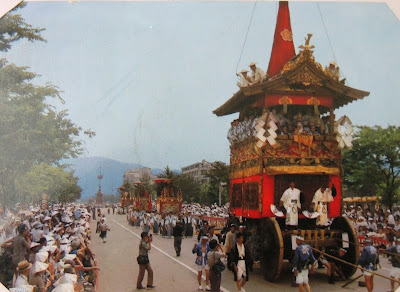
Japan - Yamahoko, the Float Ceremony of the Kyoto Gion Festival

"On July 17 every year, the Gion Festival in Kyoto in central Japan culminates in a grand procession of yamahoko, floats known as ‘moving museums’ because of their elaborate decoration with tapestries and wooden and metal ornaments. The festival is held by the Yasaka Shrine in the neighbourhood of Gion and the thirty-two floats are built by the residents of the city’s self-governing districts, who have transmitted the tradition for many years. Each district works with musicians to play in the orchestras that accompany the parade as well as diverse artisans to assemble, decorate and disassemble the floats, which proceed in an order determined each year by lottery. The floats come in two varieties: yama floats with platforms decorated to resemble mountains and hoko floats dominated by tall wooden poles originally intended to summon the Plague God so that he could be transformed into a protective spirit through music, dance and worship. Today, the yamahoko parade is a representative urban summer festival showcasing the creative spirit and artistry of the float-building districts and providing entertainment for the entire city." Source: UNESCO Intangible Cultural Heritage


Thanks to Ms Nannie of Japan.


China: Chinese Shadow Puppetry

"Chinese shadow puppetry is a form of theatre acted by colourful silhouette figures made from leather or paper, accompanied by music and singing. Manipulated by puppeteers using rods, the figures create the illusion of moving images on a translucent cloth screen illuminated from behind. Many elder shadow puppetry artists can perform dozens of traditional plays, which are orally transmitted or found in written form. They master special techniques such as improvisational singing, falsetto, simultaneous manipulation of several puppets, and the ability to play various musical instruments. Many puppeteers also carve the puppets, which can have between twelve and twenty-four moveable joints. Shadow plays are performed by large troupes with seven to nine performers and smaller troupes of only two to five, primarily for entertainment or religious rituals, weddings and funerals and other special occasions. Some puppeteers are professional, while others are amateurs performing during slack farming seasons. The relevant skills are handed down in families, in troupes, and from master to pupil. Chinese shadow puppetry also passes on information such as cultural history, social beliefs, oral traditions and local customs. It spreads knowledge, promotes cultural values and entertains the community, especially the youth." Source: UNESCO Intangible Cultural Heritage Chinese Shadow Puppetry.


Thanks to Mia of China

China: Mazu Belief and Customs

"As the most influential goddess of the sea in China, Mazu is at the centre of a host of beliefs and customs, including oral traditions, religious ceremonies and folk practices, throughout the country’s coastal areas. Mazu is believed to have lived in the tenth century on Meizhou Island, where she dedicated herself to helping her fellow townspeople, and died attempting to rescue the survivors of a shipwreck. Local residents built a temple in her honour and began to venerate her as a goddess..." Source: UNESCO Intangible Cultural Heritage


Thanks to Angie. Postcard shows Statue of Mazu, the Chinese goddess.

China: Chinese paper cut.

"Present throughout China and in various ethnic groups, paper-cut is a popular art integral to everyday lives. A predominantly female pursuit, it is transmitted from mother to daughter over a long period of time, beginning in childhood, and is particularly common in rural areas. It earns the most skilful artists respect and admiration. Many techniques are used: the paper can be cut or engraved with a chisel, coloured or left blank. Increasingly, modern technologies are used.." Source: UNESCO Intangible Cultural Heritage


Thanks to Ms Hanna.

China: Chinese Calligraphy

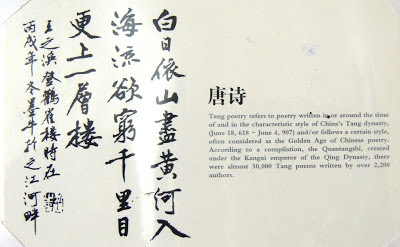
"Chinese calligraphy has always been more than simply a tool for communication, incorporating as it does the element of artistry for which the practice is still valued in an age of ballpoint pens and computers. Indeed, calligraphy is no longer the basic tool of intellectuals and officials but has become the preserve of professional artisans and amateur enthusiasts. Whether they are recording information or simply creating beautiful forms, calligraphers’ brushes are used to ink five different styles of script, known as ‘seal’, ‘official’, ‘cursive’, ‘running’ and ‘regular’..." Source: UNESCO Intangible Heritage 


Thanks to Ms Iris of China.

China - Peking Opera

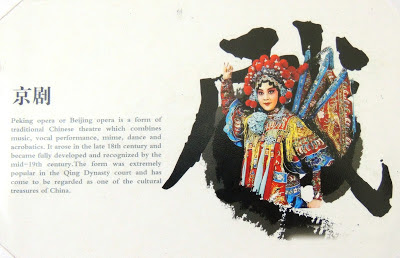
"Peking opera is a performance art incorporating singing, reciting, acting, martial arts. Although widely practised throughout China, its performance centres on Beijing, Tianjin and Shanghai. Peking opera is sung and recited using primarily Beijing dialect, and its librettos are composed according to a strict set of rules that prize form and rhyme. They tell stories of history, politics, society and daily life and aspire to inform as they entertain. The music of Peking opera plays a key role in setting the pace of the show, creating a particular atmosphere, shaping the characters, and guiding the progress of the stories. ‘Civilian plays’ emphasize string and wind instruments such as the thin, high-pitched jinghu and the flute dizi, while ‘military plays’ feature percussion instruments like the bangu or daluo. Performance is characterized by a formulaic and symbolic style with actors and actresses following established choreography for movements of hands, eyes, torsos, and feet. Traditionally, stage settings and props are kept to a minimum. Costumes are flamboyant and the exaggerated facial make-up uses concise symbols, colours and patterns to portray characters’ personalities and social identities. Peking opera is transmitted largely through master-student training with trainees learning basic skills through oral instruction, observation and imitation. It is regarded as an expression of the aesthetic ideal of opera in traditional Chinese society and remains a widely recognized element of the country’s cultural heritage." Source: UNESCO Intangible Cultural Heritage

Thanks to Iris of China.


China - The Dragon Boat Festival

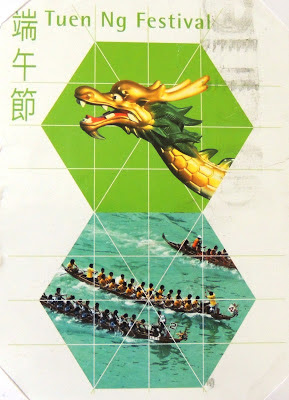
"Beginning on the fifth day of the fifth lunar month, people of several ethnic groups throughout China and the world celebrate the Dragon Boat festival, especially in the middle and lower reaches of the Yangtze River. The festivities vary from region to region, but they usually share several features. A memorial ceremony offering sacrifices to a local hero is combined with sporting events such as dragon races, dragon boating and willow shooting; feasts of rice dumplings, eggs and ruby sulphur wine; and folk entertainments including opera, song and unicorn dances. The hero who is celebrated varies by region: the romantic poet Qu Yuan is venerated in Hubei and Hunan Provinces, Wu Zixu (an old man said to have died while slaying a dragon in Guizhou Province) in South China, and Yan Hongwo in Yunnan Province among the Dai community..." Source: UNESCO Intangible Cultural Heritage 


Thanks to Mr Johnson of Hong Kong. An official card from Hong Kong Post.

China - Kun Qu Opera

"Kun Qu Opera developed under the Ming dynasty (fourteenth to seventeenth centuries) in the city of Kunshan, situated in the region of Suzhou in southeast China. With its roots in popular theatre, the repertory of songs evolved into a major theatrical form. Kun Qu is one of the oldest forms of Chinese opera still performed today. It is characterized by its dynamic structure and melody (kunqiang) and classic pieces such as the Peony Pavilion and the Hall of Longevity. It combines song and recital as well as a complex system of choreographic techniques, acrobatics and symbolic gestures. The opera features a young male lead, a female lead, an old man and various comic roles, all dressed in traditional costumes. Kun Qu songs are accompanied by a bamboo flute, a small drum, wooden clappers, gongs and cymbals, all used to punctuate actions and emotions on stage. Renowned for the virtuosity of its rhythmic patterns (changqiang), Kun Qu opera has had a considerable influence or more recent forms of Chinese opera, such as the Sichuan or Beijing opera." Source: UNESCO Intangible Cultural Heritage


China: Chinese Traditional Architectural Craftsmanship for Timber-Framed Structures

"Standing as distinctive symbols of Chinese architectural culture, timber-framed structures are found throughout the country. The wooden components such as the columns, beams, purlins, lintel and bracket sets are connected by tenon joints in a flexible, earthquake-resistant way. The surprisingly strong frames can be installed quickly at the building site by assembling components manufactured in advanced. In addition to this structural carpentry, the architectural craft also encompasses decorative woodworking, tile roofing, stonework, decorative painting and other arts passed down from masters to apprentices through verbal and practical instruction. Each phase of the construction procedure demonstrates its unique and systematic methods and skills. Employed today mainly in the construction of structures in the traditional style and in restoring ancient timber-framed buildings, Chinese traditional architectural craftsmanship for timber-framed structures embodies a heritage of wisdom and craftsmanship and reflects an inherited understanding of nature and interpersonal relationships in traditional Chinese society. For the carpenters and artisans who preserve this architectural style, and for the people who have lived in and among the spaces defined by it for generations, it has become a central visual component of Chinese identity and an important representative of Asian architecture." Source: UNESCO Intangible Cultural Heritage


Thanks to Yavyao. The Postcard features the wooden ceiling at Temple of Heaven, Beijing.

Saturday, July 26, 2014

Indonesia: Indonesian Batik

The techniques, symbolism and culture surrounding hand-dyed cotton and silk garments known as Indonesian Batik permeate the lives of Indonesians from beginning to end: infants are carried in batik slings decorated with symbols designed to bring the child luck, and the dead are shrouded in funerary batik. Clothes with everyday designs are worn regularly in business and academic settings, while special varieties are incorporated into celebrations of marriage and pregnancy and into puppet theatre and other art forms. The garments even play the central role in certain rituals, such as the ceremonial casting of royal batik into a volcano. Batik is dyed by proud craftspeople who draw designs on fabric using dots and lines of hot wax, which resists vegetable and other dyes and therefore allows the artisan to colour selectively by soaking the cloth in one colour, removing the wax with boiling water and repeating if multiple colours are desired. The wide diversity of patterns reflects a variety of influences, ranging from Arabic calligraphy, European bouquets and Chinese phoenixes to Japanese cherry blossoms and Indian or Persian peacocks. Often handed down within families for generations, the craft of batik is intertwined with the cultural identity of the Indonesian people and, through the symbolic meanings of its colours and designs, expresses their creativity and spirituality. Source:www.unesco.org


Thanks to Ms Diananti.

China: Regong arts

In monasteries and villages along the Longwu River basin in Qinghai Province in western China, Buddhist monks and folk artists of the Tibetan and Tu ethnicity carry on the plastic arts of painting thangkaand murals, crafting patchwork barbola and sculpting known collectively as the Regong arts. Their influence extends to nearby provinces and beyond to South-East Asian countries. Thangka, the art of painting religious scrolls used to venerate Buddha, uses a special brush to apply natural dyes to cloth prepared with patterns sketched in charcoal; barbola employs plant and animal forms cut from silk fabric to create soft relief art for veils and column ornaments; and wood, clay, stone or brick Regong sculpture decorates rafters, wall panels, tea tables and cabinets in both temples and homes. The technique is mainly passed from fathers to children or from masters to apprentices strictly following ancient Buddhist painting books that provide instruction on line and figure drawing, colour matching and pattern design. Characterized by a distinctively Tibetan Buddhist religion style and unique regional features, the Regong arts embody the spiritual history and traditional culture of the region and remain an integral part of the artistic life of people there today


Thanks to Ms Cydia.

Indonesia: Indonesian Angklung

Angklung is an Indonesian musical instrument consisting of two to four bamboo tubes suspended in a bamboo frame, bound with rattan cords. The tubes are carefully whittled and cut by a master craftsperson to produce certain notes when the bamboo frame is shaken or tapped. Each Angklung produces a single note or chord, so several players must collaborate in order to play melodies. Traditional Angklungs use the pentatonic scale, but in 1938 musician Daeng Soetigna introduced Angklungs using the diatonic scale; these are known as angklung padaeng. The Angklung is closely related to traditional customs, arts and cultural identity in Indonesia, played during ceremonies such as rice planting, harvest and circumcision. The special black bamboo for the Angklung is harvested during the two weeks a year when the cicadas sing, and is cut at least three segments above the ground, to ensure the root continues to propagate. Angklung education is transmitted orally from generation to generation, and increasingly in educational institutions. Because of the collaborative nature of Angklung music, playing promotes cooperation and mutual respect among the players, along with discipline, responsibility, concentration, development of imagination and memory, as well as artistic and musical feelings. Source: www.unesco.org

Postcard 1


Postcard 2


Thanks to Ms Shinta for 2 lovely cards.

Thursday, July 24, 2014

Japan: Washoku, traditional dietary cultures of the Japanese, notably for the celebration of New Year

Washoku is a social practice based on a set of skills, knowledge, practice and traditions related to the production, processing, preparation and consumption of food. It is associated with an essential spirit of respect for nature that is closely related to the sustainable use of natural resources. The basic knowledge and the social and cultural characteristics associated with Washoku are typically seen during New Year celebrations. The Japanese make various preparations to welcome the deities of the incoming year, pounding rice cakes and preparing special meals and beautifully decorated dishes using fresh ingredients, each of which has a symbolic meaning. These dishes are served on special tableware and shared by family members or collectively among communities. The practice favours the consumption of various natural, locally sourced ingredients such as rice, fish, vegetables and edible wild plants. The basic knowledge and skills related to Washoku, such as the proper seasoning of home cooking, are passed down in the home at shared mealtimes. Grassroots groups, schoolteachers and cooking instructors also play a role in transmitting the knowledge and skills by means of formal and non-formal education or through practice. Source:unesco.org


Thanks to Tomoko.