Showing posts with label Hungary UNESCO. Show all posts

Wednesday, July 31, 2019

Austria/ Hungary: Fertö / Neusiedlersee Cultural Landscape (2001)

The Fertö/Neusiedler Lake area has been the meeting place of different cultures for eight millennia. This is graphically demonstrated by its varied landscape, the result of an evolutionary symbiosis between human activity and the physical environment. The remarkable rural architecture of the villages surrounding the lake and several 18th- and 19th-century palaces adds to the area’s considerable cultural interest. Source:whc.unesco.org

Postcard 1: Neusiedlersee National Park, Austria


Thanks to Ms Natalia
Postcard 2: Fetro-Hansag Nemzeti Park, Hungary

Thanks to Laco.

Friday, June 9, 2017

Hungary: Budapest, including the Banks of the Danube, the Buda Castle Quarter and Andrássy Avenue

Budapest is the capital and most populous city of Hungary and one of the largest cities in the European Union. The central area of the city along the Danube River is classified as a UNESCO World Heritage Site and has many notable monuments, including the Hungarian Parliament, Buda Castle, Fisherman's Bastion, Gresham Palace, Széchenyi Chain Bridge, Matthias Church and the Liberty Statue. Further famous landmarks include Andrássy Avenue, St. Stephen's Basilica, Heroes' Square, the Great Market Hall, the Nyugati Railway Station built by the Eiffel Company of Paris in 1877 and the second-oldest metro line in the world, the Millennium Underground Railway.
Inscibed: 1987, Extension 2002

Postcard 1: Buda Castle


Thanks to Ms Gyongy .
Postcard 2: Hungarian Parliament


Hungary: Early Christian Necropolis of Pécs (Sopianae)

In the 4th century, a remarkable series of decorated tombs were constructed in the cemetery of the Roman provincial town of Sopianae (modern Pécs). These are important both structurally and architecturally, since they were built as underground burial chambers with memorial chapels above the ground. The tombs are important also in artistic terms, since they are richly decorated with murals of outstanding quality depicting Christian themes.
Inscribed: 2000


Thanks to Mr Karr.

Hungary: Old Village of Hollókő and its Surroundings

Hollókő is a Palóc ethnographic village in Hungary. Its name means "Raven-stone" in Hungarian. The village is located in Nógrád county, approximately 91.1 kilometres northeast from Budapest, the capital of Hungary. It lies in a valley of Cserhát Mountains, surrounded by low peaks.
Inscribed: 1987


Thanks to Ms Rita.

Hungary: Millenary Benedictine Abbey of Pannonhalma and its Natural Environment

The Benedictine Pannonhalma Archabbey is a medieval building in Pannonhalma, one of the oldest historical monuments in Hungary. Founded in 996, it is located near the town, on top of a hill (282 m). Saint Martin of Tours is believed to have been born at the foot of this hill, hence its former name, Mount of Saint Martin, from which the monastery occasionally took the alternative name of Márton-hegyi Apátság. This is the second largest territorial abbey in the world, after the one in Monte Cassino. Its sights include the Basilica with the Crypt (built in the 13th century), the Cloisters, the monumental Library with 360,000 volumes, the Baroque Refectory (with several examples of trompe l'oeil) and the Archabbey Collection (the second biggest in the country).
Inscribed: 1996


Thanks to Mr Karr.

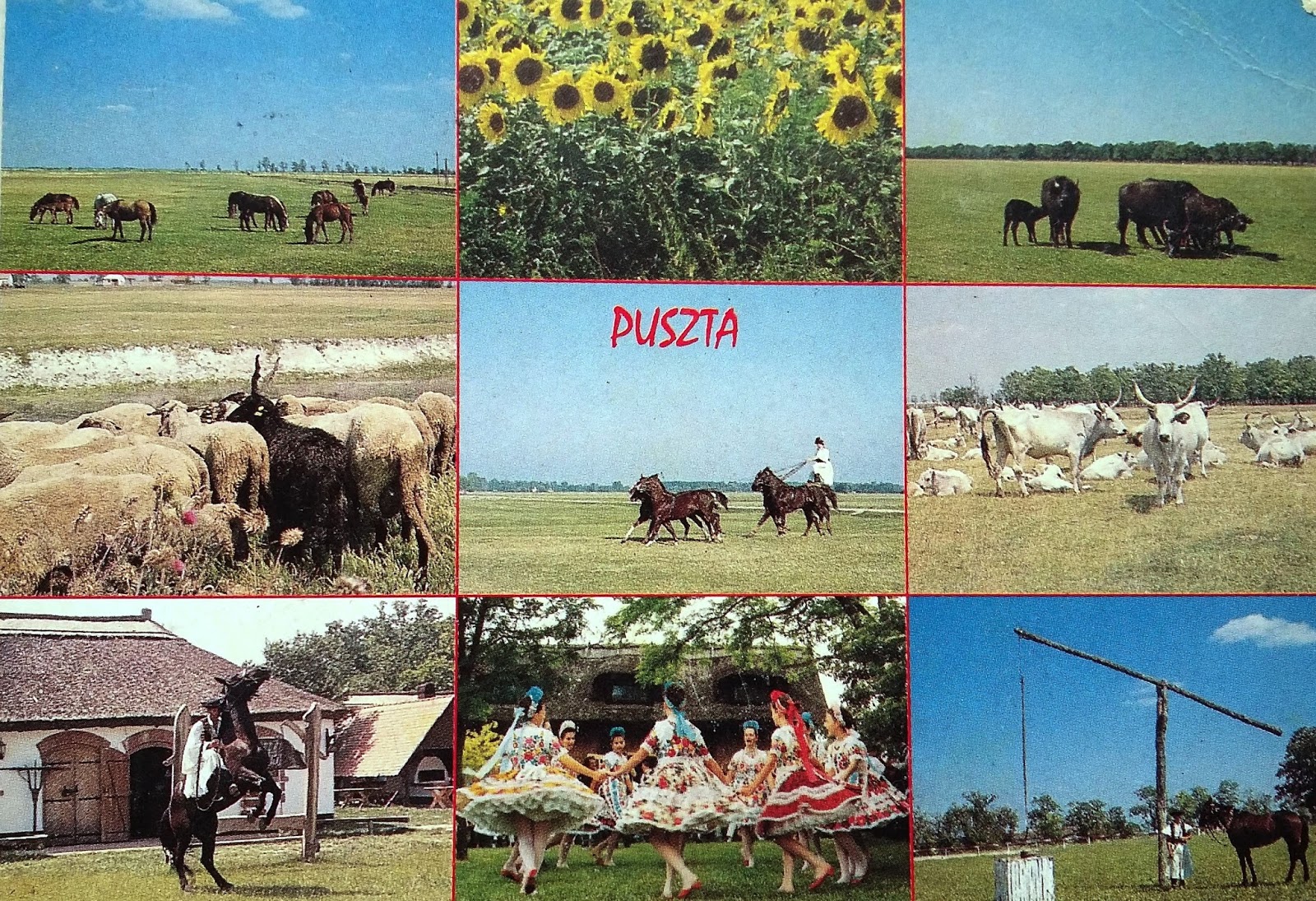
Hungary: Hortobágy National Park - the Puszta

The Puszta is a grassland biome on the Great Hungarian Plain around the River Tisza in the eastern part of Hungary as well as on the western part of Hungary and in the Austrian Burgenland. The Hungarian puszta is an exclave of the Eurasian Steppe. It covers a total area of ca. 50,000 km² (20,000 mi²). The characteristic landscape is composed of treeless plains, saline steppes and salt lakes, and includes scattered sand dunes, low, wet forests and freshwater marshes along the floodplains of the ancient rivers.
Inscribed: 1999


Thanks to Karr.

Hungary/Slovakia: Caves of Aggtelek Karst and Slovak Karst

The variety of formations and the fact that they are concentrated in a restricted area means that the 712 caves currently identified make up a typical temperate-zone karstic system. Because they display an extremely rare combination of tropical and glacial climatic effects, they make it possible to study geological history over tens of millions of years.
Inscribed: 1995, Extension, 2000

Post card 1: Baradla Cave, Hungary


Thanks to Ms Rita.

Postcard 2: Dobšinská Ice Cave, Slovakia


Thanks to Ms Wanda who sent it from Poland.