Showing posts with label Japan UNESCO. Show all posts

Thursday, December 9, 2021

Japan: Hidden Christian Sites in the Nagasaki Region

Located in the north-western part of Kyushu island, this serial property consists of ten villages, remains of the Hara Castle and a cathedral, dating from the 17th to the 19th centuries. They reflect the era of prohibition of the Christian faith, as well as the revitalization of Christian communities after the official lifting of prohibition in 1873. These sites bear unique testimony to a cultural tradition nurtured by hidden Christians in the Nagasaki region who secretly transmitted their faith during the period of prohibition from the 17th to the 19th century. Source:whc.unesco.org
Inscribed: 2018


Thanks to Ms Chinami

Saturday, December 7, 2019

Japan: Mozu-Furuichi Kofun Group: Mounded Tombs of Ancient Japan

Located on a plateau above the Osaka Plain, this property includes 49 kofun (“old mounds” in Japanese). These tombs were for members of the elite. These kofun have been selected from among a total of 160,000 in Japan and form the richest material representation of the Kofun period, from the 3rd to the 6th century CE. They demonstrate the differences in social classes of that period and show evidence of a highly sophisticated funerary system. Burial mounds of significant variations in size, kofun take the geometrically elaborate design forms of keyhole, scallop, square or circle. They were decorated with paving stones and clay figures. The kofun demonstrate exceptional technical achievements of earthen constructions. Source:whc.unesco.org
Inscribed: 2019


Thanks to Ms Annie

Friday, March 15, 2019

The Architectural Work of Le Corbusier, an Outstanding Contribution to the Modern Movement

Argentina-Belgium-France-Germany-India-Japan-Switzerland
Chosen from the work of Le Corbusier, the 17 sites comprising this transnational serial property are spread over seven countries and are a testimonial to the invention of a new architectural language that made a break with the past. They were built over a period of a half-century, in the course of what Le Corbusier described as “patient research”. The Complexe du Capitole in Chandigarh (India), the National Museum of Western Art, Tokyo (Japan), the House of Dr Curutchet in La Plata (Argentina) and the Unité d’habitation in Marseille (France) reflect the solutions that the Modern Movement sought to apply during the 20th century to the challenges of inventing new architectural techniques to respond to the needs of society. These masterpieces of creative genius also attest to the internationalization of architectural practice across the planet. Source:whc.unesco.org
Inscribed: 2016

INDIA:
1) Complexe du Capitole-Received
JAPAN:
2) Musée National des Beau-Arts de l’Occident -Received
BELGIUM:
3) Maison Guiete- Received
GERMANY:
4) Maisons de la Weissenhof-Siedlung-Received
FRANCE:
5) Chapelle Notre-Dame-du-Haut de Ronchamp
6) Unité d’habitation Marseille
7) Maisons La Roche et Jeanneret 
8) Cité Frugès 
9) Villa Savoye et loge du jardiner 
10) Immeuble locatif à la Porte Molitor 
11) La Manufacture à Saint- Dié 
12) Cabanon de Le Corbusier 
13) Couvent Sainte-Marie-de-la-Tourette 
14) Maison de la Culture de Firminy 
SWITZERLAND:
15) Petite villa au bord du lac Léman- Received
16) Immeuble Clarté 
ARGENTINA:
17) Maison du docteur Curutchet

India: Complexe du Capitole


Thanks to Mr Sanket.

Japan: Musée National des Beaux-Arts de l’Occident


Thanks to Ms Bie Hao. 

Japan: Musée National des Beaux-Arts de l’Occident


Thanks to Ms Seeta.
Belgium: Maison Guiete


Thanks to Mr Zavier who was visiting Belgium.

Germany: Maisons de la Weissenhof-Siedlung


Thanks to Ms Steffi.

Germany: Maisons de la Weissenhof-Siedlung (Outer View, Bottom Left)


France: Showing all the Sites around the world including France


Thanks to Mr Zavier of Spain.This postcard issued by Le Corbusier foundation.

Switzerland: Petite villa au bord du lac Léman

Thanks to Mr Oscar.

Monday, May 28, 2018

Japan: Hemenji-jo

Himeji-jo is the finest surviving example of early 17th-century Japanese castle architecture, comprising 83 buildings with highly developed systems of defence and ingenious protection devices dating from the beginning of the Shogun period. It is a masterpiece of construction in wood, combining function with aesthetic appeal, both in its elegant appearance unified by the white plastered earthen walls and in the subtlety of the relationships between the building masses and the multiple roof layers. Source: whc.unesco.org
Inscribed: 1993

Postcard 1
 Thanks to Ms Tara.
Postcard 2

Thanks to Ukari

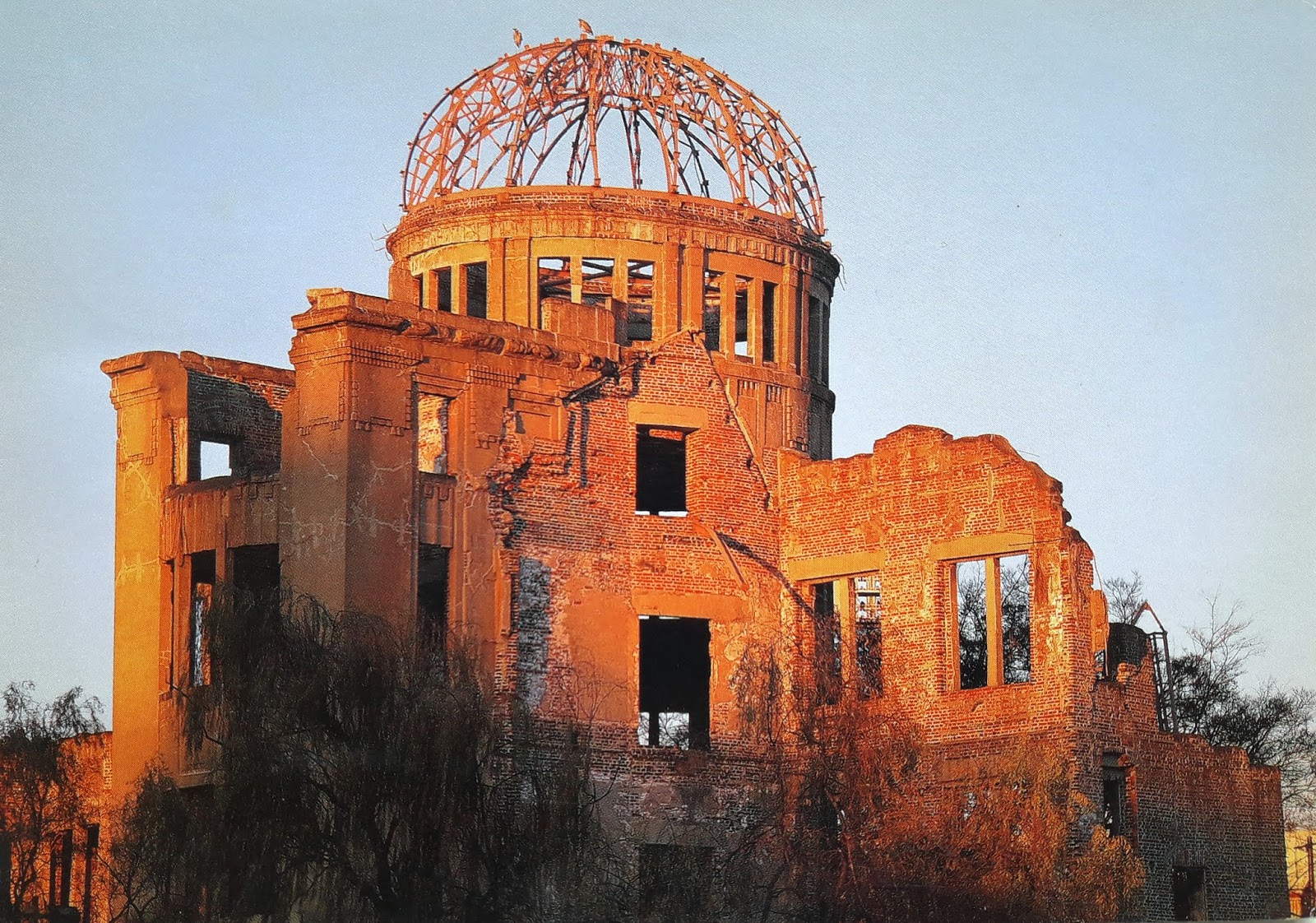
Japan: Hiroshima Peace Memorial (Genbaku Dome)

The Hiroshima Peace Memorial (Genbaku Dome) was the only structure left standing in the area where the first atomic bomb exploded on 6 August 1945. Through the efforts of many people, including those of the city of Hiroshima, it has been preserved in the same state as immediately after the bombing. Not only is it a stark and powerful symbol of the most destructive force ever created by humankind; it also expresses the hope for world peace and the ultimate elimination of all nuclear weapons. Source:whc.unesco.org
Inscribed: 1996

Postcard 1

 Thanks to Ms Ichigo.
Postcard 2

 Thanks to Mr Kenji
Postcard 3


Thanks to Ms Aj Nishizawa. She has used a matching stamp and a pictorial postmark depicting Kyoto temple.

Japan: Shiretoko

Shiretoko Peninsula is located in the north-east of Hokkaido, the northernmost island of Japan. The site includes the land from the central part of the peninsula to its tip (Shiretoko Cape) and the surrounding marine area. It provides an outstanding example of the interaction of marine and terrestrial ecosystems as well as extraordinary ecosystem productivity, largely influenced by the formation of seasonal sea ice at the lowest latitude in the northern hemisphere. It has particular importance for a number of marine and terrestrial species, some of them endangered and endemic, such as Blackiston’s fish owl and the Viola kitamiana plant. The site is globally important for threatened seabirds and migratory birds, a number of salmonid species, and for marine mammals including Steller’s sea lion and some cetacean species. Source:whc.unesco.org
Inscribed: 2005


Thanks to Ms Sandy.

Japan: Shirakami-Sanchi

Situated in the mountains of northern Honshu, this trackless site includes the last virgin remains of the cool-temperate forest of Siebold's beech trees that once covered the hills and mountain slopes of northern Japan. The black bear, the serow and 87 species of birds can be found in this forest. Source:whc.unesco.org
Inscribed: 1993


Thanks to Ms Aj Nishizawa.

Sunday, July 2, 2017

Japan: Tomioka Silk Mill and Related Sites

Tomioka Silk Mill is Japan's oldest modern model silk reeling factory, established in 1872 by the government to introduce modern machine silk reeling from France and spread its technology in Japan. The factory is designated by the government as a historic site and all its buildings are preserved in very good condition. It is a big factory in the old city of Tomioka, in Gunma prefecture, Japan, about 100 km northwest of Tokyo. Source: wikipedia
Inscribed: 2014

Thanks to Ms Phoebe Wai for the shaped card.

Friday, July 24, 2015

Japan: Hiraizumi – Temples, Gardens and Archaeological Sites Representing the Buddhist Pure Land

Hiraizumi - Temples, Gardens and Archaeological Sites Representing the Buddhist Pure Land comprises five sites, including the sacred Mount Kinkeisan. It features vestiges of government offices dating from the 11th and 12th centuries when Hiraizumi was the administrative centre of the northern realm of Japan and rivalled Kyoto. The realm was based on the cosmology of Pure Land Buddhism, which spread to Japan in the 8th century. It represented the pure land of Buddha that people aspire to after death, as well as peace of mind in this life. In combination with indigenous Japanese nature worship and Shintoism, Pure Land Buddhism developed a concept of planning and garden design that was unique to Japan. Source:whc.unesco.org
Inscribed: 2011


Thanks to Ms Mu Shishido

Thursday, July 24, 2014

Japan: Fujisan, sacred place and source of artistic inspiration

The beauty of the solitary, often snow-capped, stratovolcano, known around the world as Mount Fuji, rising above villages and tree-fringed sea and lakes has long been the object of pilgrimages and inspired artists and poets. The inscribed property consists of 25 sites which reflect the essence of Fujisan’s sacred and artistic landscape. In the 12th century, Fujisan became the centre of training for ascetic Buddhism, which included Shinto elements. On the upper 1,500-metre tier of the 3,776m mountain, pilgrim routes and crater shrines have been inscribed alongside sites around the base of the mountain including Sengen-jinja shrines, Oshi lodging houses, and natural volcanic features such as lava tree moulds, lakes, springs and waterfalls, which are revered as sacred. Its representation in Japanese art goes back to the 11th century, but 19th century woodblock prints of views, including those from sand beaches with pine tree groves have made Fujisan an internationally recognized icon of Japan and have had a deep impact on the development of Western art. Source:whc.unesco.org
Inscribed: 2013

Postcard 1


Thanks to Ms Fumie. A matching stamp used.
Postcard 2

Thanks to my uncle Mr K.D.Pai who was visiting Japan. A matching cancellation.

Sunday, July 6, 2014

Japan: Historic Villages of Shirakawa-go and Gokayama

Located in a mountainous region that was cut off from the rest of the world for a long period of time, these villages with their Gassho-style houses subsisted on the cultivation of mulberry trees and the rearing of silkworms. The large houses with their steeply pitched thatched roofs are the only examples of their kind in Japan. Despite economic upheavals, the villages of Ogimachi, Ainokura and Suganuma are outstanding examples of a traditional way of life perfectly adapted to the environment and people's social and economic circumstances. Source:whc.unesco.org
Inscribed: 1995


Thanks to Ms Aj Nishizawa for the wonderful card. He has used a matching stamp and a pictorial postmark depicting Temple Hogan Ji which is a UNESCO heritage temple in Kyoto.

Japan: Ogasawara Islands

The property numbers more than 30 islands clustered in three groups and covers surface area of 7,939 hectares. The islands offer a variety of landscapes and are home to a wealth of fauna, including the Bonin Flying Fox, a critically endangered bat, and 195 endangered bird species. Four-hundred and forty-one native plant taxa have been documented on the islands whose waters support numerous species of fish, cetaceans and corals. Ogasawara Islands' ecosystems reflect a range of evolutionary processes illustrated through its assemblage of plant species from both southeast and northwest Asia, alongside many endemic species. Source:whc.unesco.org
Inscribed: 2011


Thanks to Ms Aj Nishizawa. She has used matching stamps of the Islands.

Japan: Buddhist Monuments in the Horyu-ji Area

There are around 48 Buddhist monuments in the Horyu-ji area, in Nara Prefecture. Several date from the late 7th or early 8th century, making them some of the oldest surviving wooden buildings in the world. These masterpieces of wooden architecture are important not only for the history of art, since they illustrate the adaptation of Chinese Buddhist architecture and layout to Japanese culture, but also for the history of religion, since their construction coincided with the introduction of Buddhism to Japan from China by way of the Korean peninsula. Source:whc.unesco.org
Inscribed: 1993


Thanks to Ms Kenji.

Japan: Itsukushima Shinto Shrine

The island of Itsukushima, in the Seto inland sea, has been a holy place of Shintoism since the earliest times. The first shrine buildings here were probably erected in the 6th century. The present shrine dates from the 12th century and the harmoniously arranged buildings reveal great artistic and technical skill. The shrine plays on the contrasts in colour and form between mountains and sea and illustrates the Japanese concept of scenic beauty, which combines nature and human creativity. source:whc.unesco.org
Inscribed: 1996


Thanks to Ms Saori Nakamura.

Japan: Yakushima

Located in the interior of Yaku Island, at the meeting-point of the palaearctic and oriental biotic regions, Yakushima exhibits a rich flora, with some 1,900 species and subspecies, including ancient specimens of the sugi (Japanese cedar). It also contains a remnant of a warm-temperate ancient forest that is unique in this region. source:whc.unesco.org
Inscribed:1993


Thanks to Ms Ai Nisizawa. Nice Matching stamps used.

Japan: Historic Monuments of Ancient Nara

Nara was the capital of Japan from 710 to 784. During this period the framework of national government was consolidated and Nara enjoyed great prosperity, emerging as the fountainhead of Japanese culture. The city's historic monuments – Buddhist temples, Shinto shrines and the excavated remains of the great Imperial Palace – provide a vivid picture of life in the Japanese capital in the 8th century, a period of profound political and cultural change. source:whc.unesco.org
Inscribed: 1998

Postcard 1: Great Buddha, TodaiJi Temple

Thanks to Kenji
Postcard 2: West Pagoda, Yakushiji Temple

Thanks to Kyoto 348.